
Last updated September 10, 2026
Full 25-point door and opener safety check with every visit - springs, cables, rollers, tracks, and your LiftMaster or Chamberlain opener included
You get a price before we start. It does not change when the truck arrives.
 Before
 After
After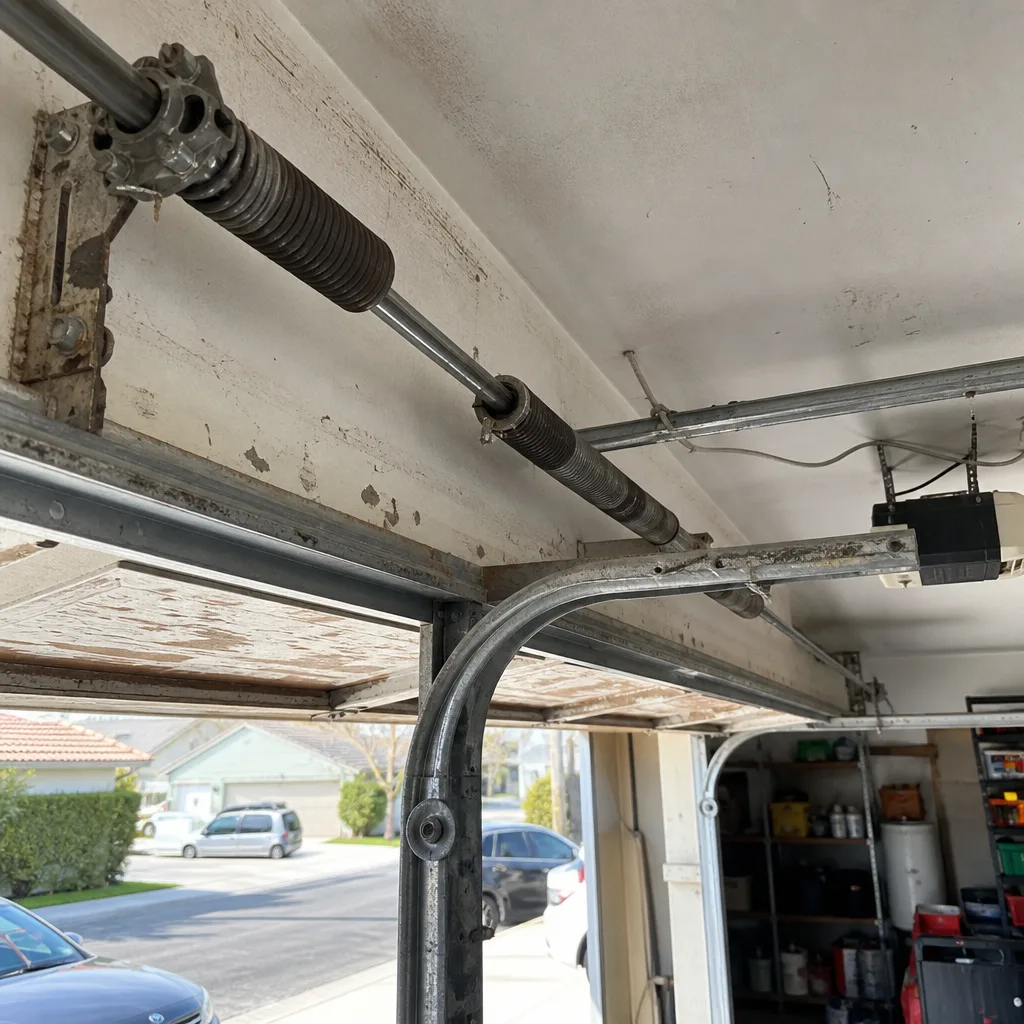 Before
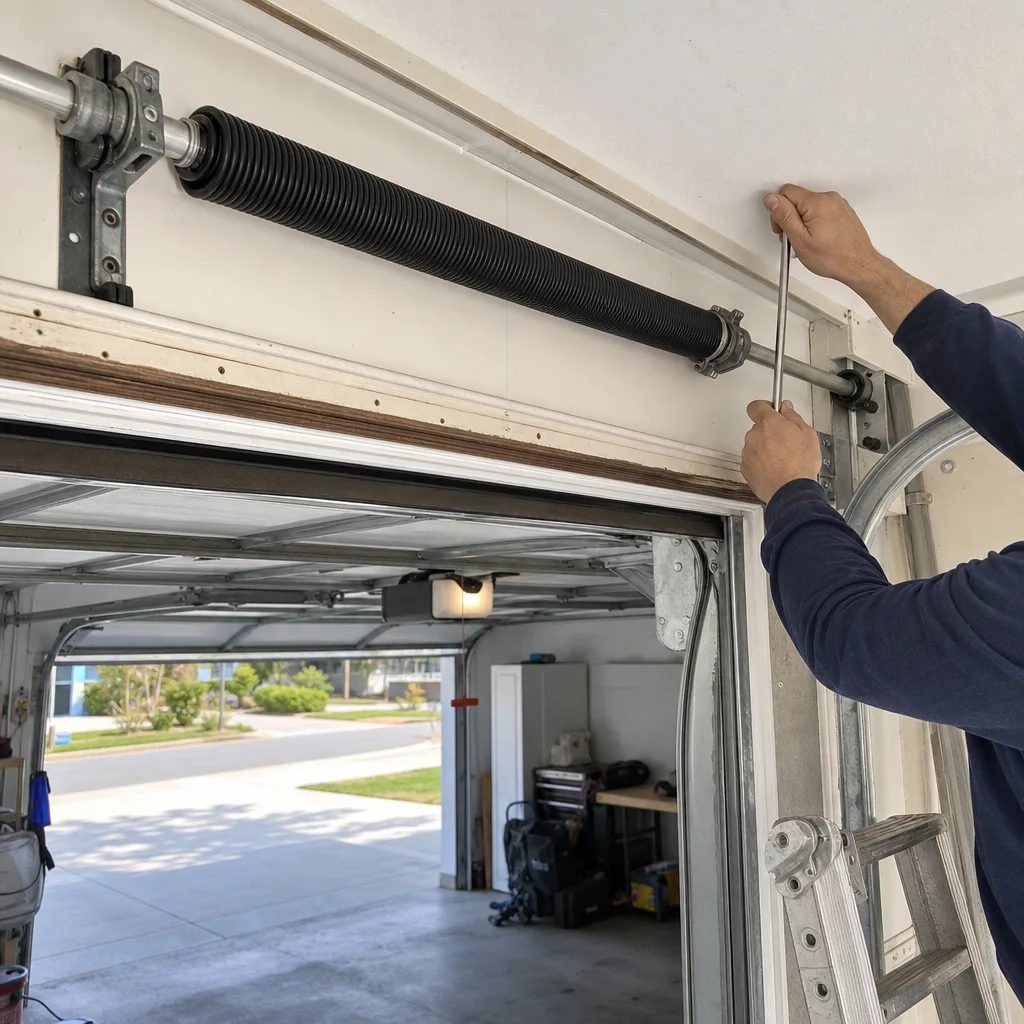 After
After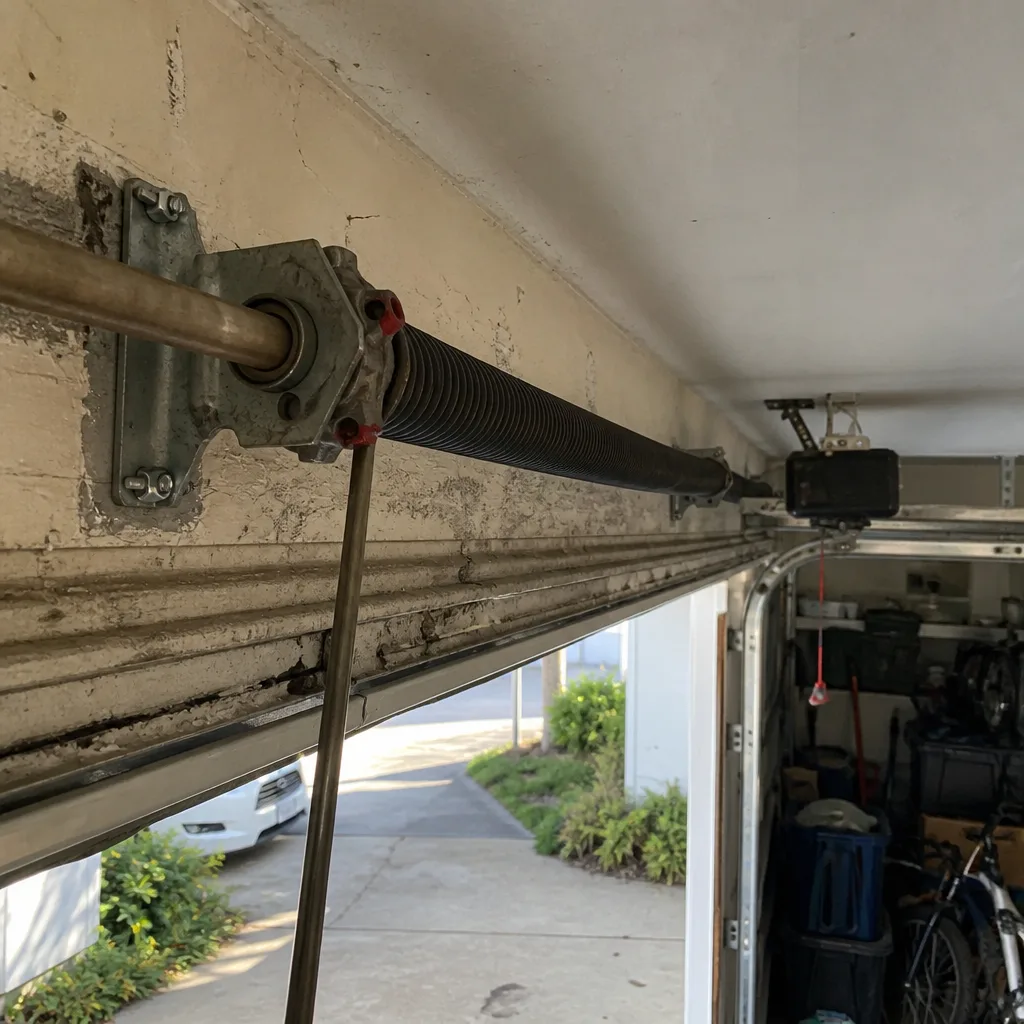 Before
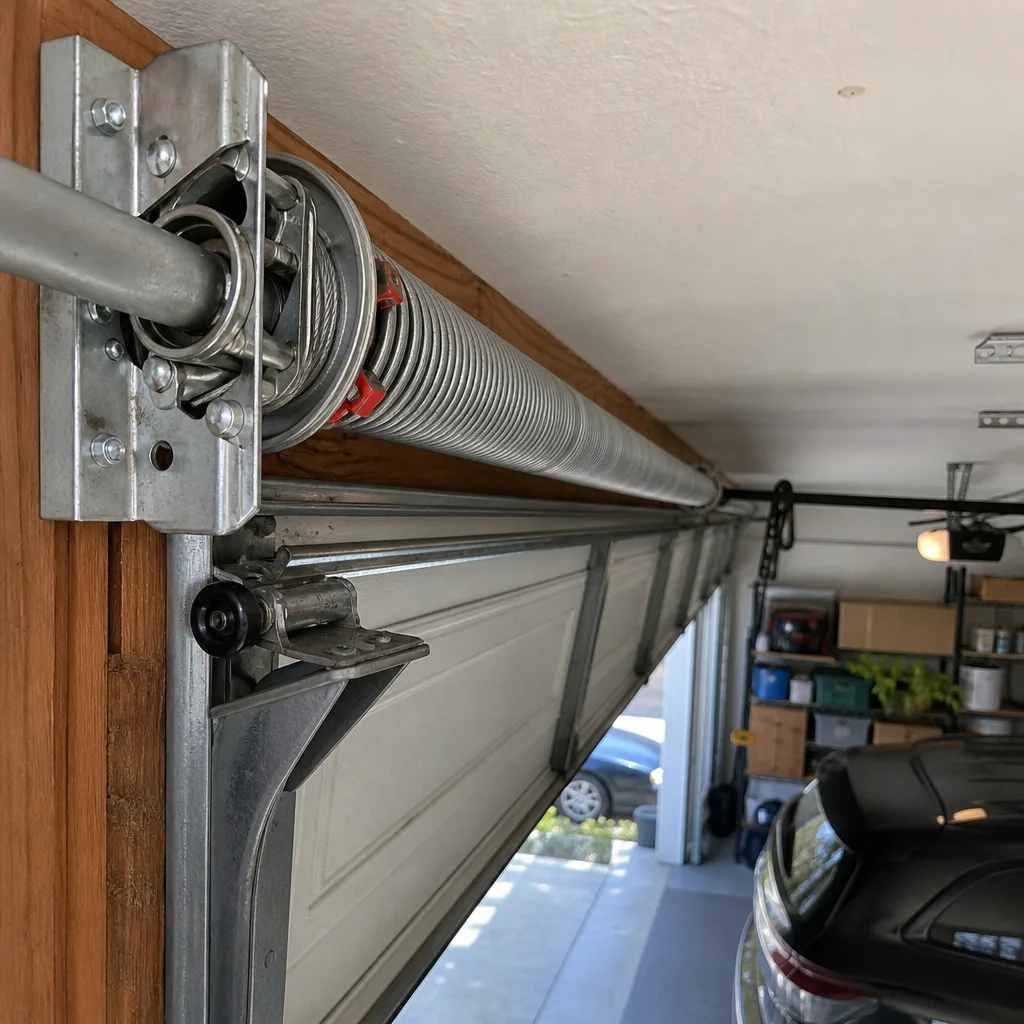 After
AfterGarage Door Warning Signs: A Newport Beach Homeowner’s Reference Guide
A garage door that hesitates for half a second before moving is not “a little slow.” It is a torsion spring that has lost enough tension to put abnormal load on the opener motor, and that motor is now failing on a shorter clock than it should. In Newport Beach, where many homes were built during the 1970s and 1980s construction boom, original garage doors are now forty years into their service life. They do not fail without warning. They telegraph problems through sounds, movements, and visual cues that are easy to read once you know what you’re looking at. This guide teaches you to identify the symptom, understand the underlying cause, and judge whether it is a same-week call or an emergency stop-using-the-door situation. Browse our more guides & resources for additional homeowner help.
Quick Answer
The most critical garage door warning signs are: a door that hesitates or reverses unexpectedly, loud grinding or popping sounds during operation, visible gaps in torsion springs or frayed cables, and sagging or uneven movement. In Newport Beach’s coastal climate, also watch for rust bloom on cable strands, white oxidation on aluminum rollers, and weatherstrip adhesion failure from UV exposure. These symptoms indicate specific component failures that range from routine maintenance to immediate safety hazards requiring professional repair.
Table of Contents
- The Sound Symptom Index: What Your Garage Door Is Telling You
- The 5-Minute Visual Inspection Every Homeowner Can Do
- Alignment Problem or Structural Header Sag? How to Tell
- Three Warning Signs That Mean Stop Using the Door Now
- Coastal-Specific Warning Signs in Newport Beach
- Garage Door Opener Warning Signs
- When to Schedule Maintenance vs. When to Call for Repair
The Sound Symptom Index: What Your Garage Door Is Telling You
Sound is the earliest and most reliable indicator of garage door distress. The acoustic signature of a failing component is distinct, and learning to match the sound to the problem buys you time to schedule repair before catastrophic failure.
Grinding: Metal on Metal at the Rollers or Track
A low, continuous grinding during door travel usually means steel rollers have worn through their factory lubrication and are now scoring the track. In Newport Beach, this accelerates in homes within a mile of the coast where salt air penetrates garages through vent openings. The grinding you hear is the roller bearing race disintegrating. Left alone, the roller will seize, the door will jam mid-travel, and the opener will continue trying to move it, stripping drive gears in a garage door opener that was otherwise healthy.
We replace these with sealed nylon rollers on most service calls. They run quieter and do not require annual re-lubrication.
Squealing: High-Pitched Protest from Dry Components
Squealing is the sound of metal under friction without adequate lubrication. It most commonly originates from hinge pins and roller stems. Unlike grinding, squealing often appears in the first three feet of travel and the last three feet, where the door changes direction and hinge angles shift. A can of silicone-based garage door lubricant from the hardware store will quiet this for a month or two, but persistent squealing usually means the hinge barrel is ovaling out or the roller stem is worn. These are $8 parts that prevent $300 opener damage.
Popping: The Torsion Spring Warning Shot
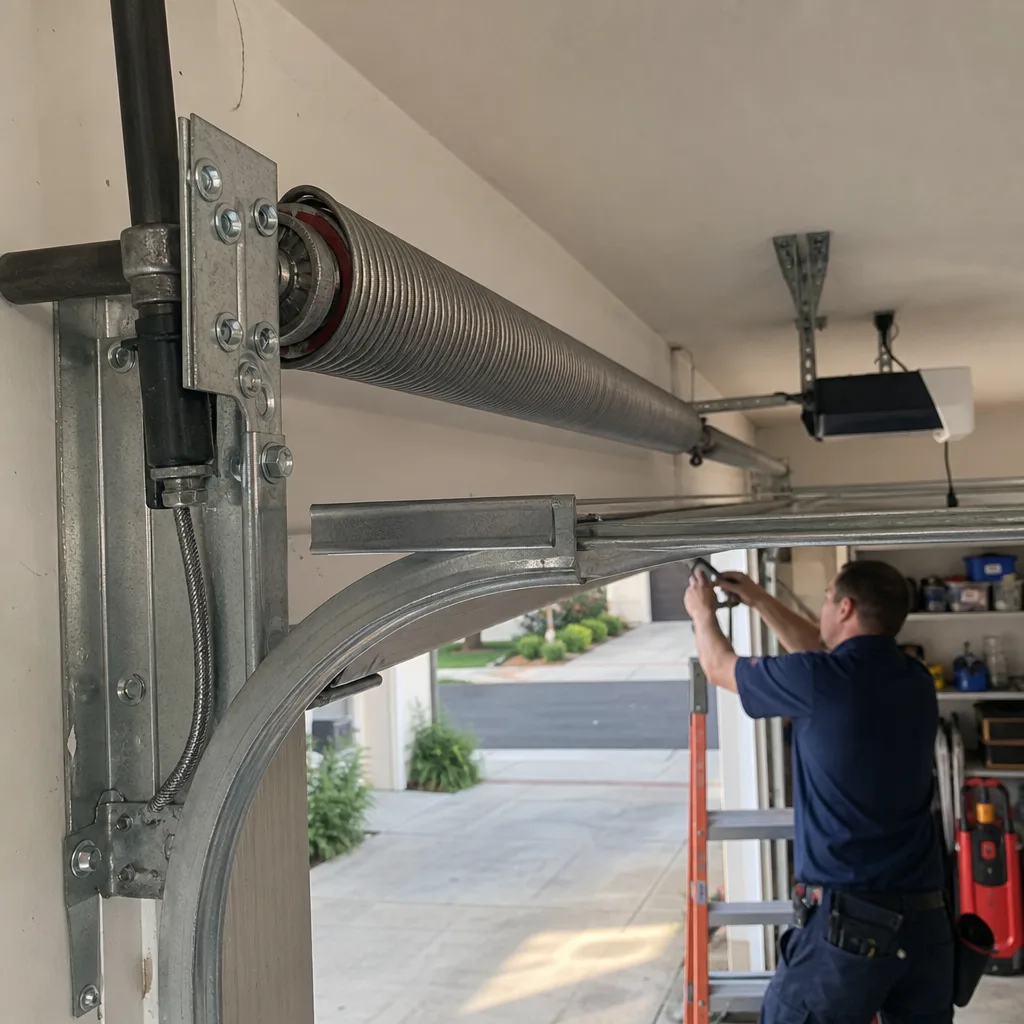
A single loud pop, or a rhythmic pop-pop-pop during door travel, is the most serious sound on this list. It means a torsion spring is either breaking strand by strand or the spring anchor bracket is working loose from the header. In Corona del Mar and the Balboa Peninsula, where many garages are unconditioned and temperature swings are extreme, we see this more often than inland Newport Beach neighborhoods like Newport Coast. The pop is the sound of stored energy releasing in small increments. When the final strand gives way, the spring unwinds violently. If you hear popping, stop using the door and call for garage door repair in Newport Beach.
Rhythmic Thumping: Cable Drum or Bottom Roller Issue
A thump-thump-thump that matches the door’s travel speed indicates a cable that has jumped its drum groove or a bottom roller that is flat-spotted from impact. The thumping is the door literally limping on each cycle. This puts lateral load on the track, gradually bending the vertical track sections until the door binds completely.
Straining Motor: The Opener Working Too Hard
An opener that sounds like it is struggling, revving higher than you remember, is often the last symptom you notice before the opener fails. The motor is not weak. It is compensating for a door that has become too heavy due to spring tension loss. We measure door weight during every service call. A properly spring-balanced door should weigh 8-12 pounds at the handle. When springs weaken, that number climbs to 30, 40, sometimes 60 pounds. The opener is not designed for that load.
The 5-Minute Visual Inspection Every Homeowner Can Do
You do not need to touch hardware under tension to spot most problems. Stand at the garage door opener button, face the door, and work through this sequence. Keep your hands in your pockets. Looking is safe. Touching is not.
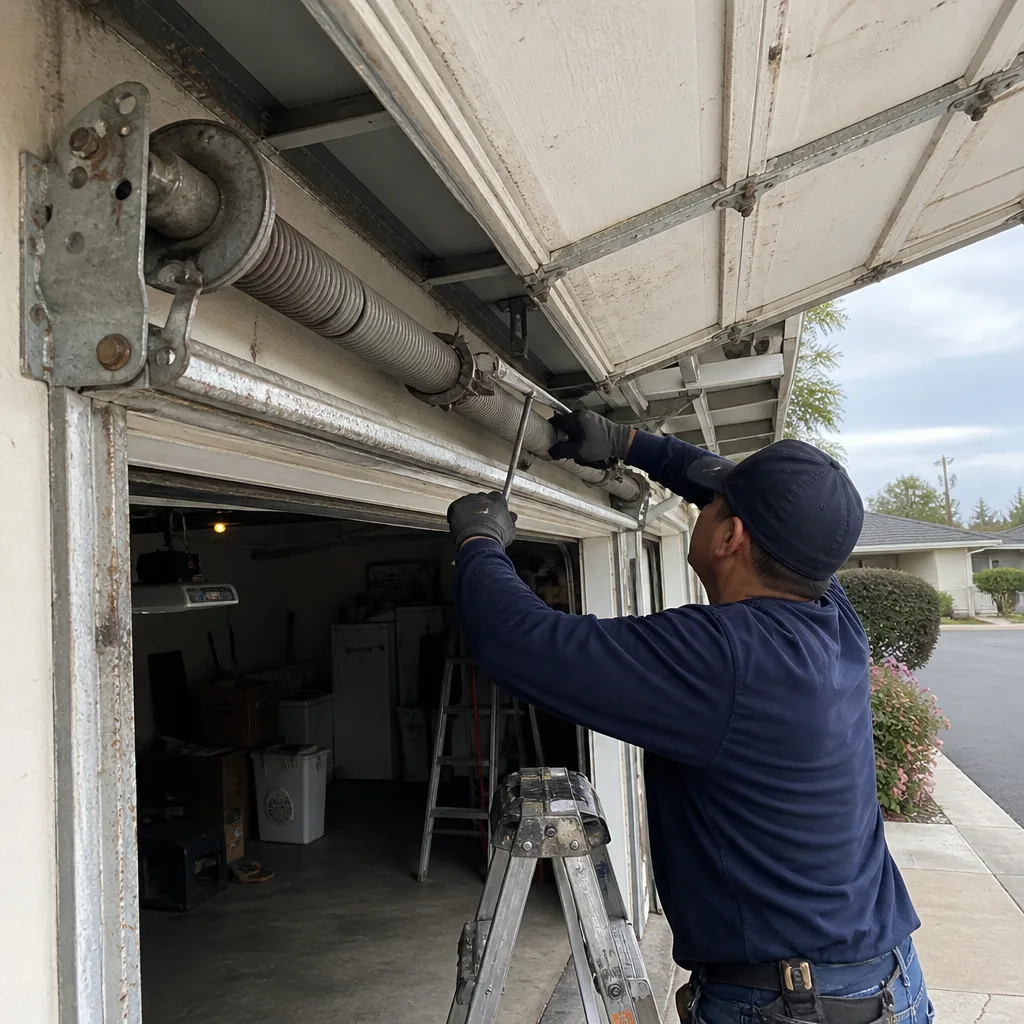
- Check the torsion spring for gaps. Look at the coil above the door. A healthy spring has coils that sit tight together when the door is closed. Gaps between coils mean the spring has lost tension and stretched. Count the gaps. One gap is a watch item. Three or more means the spring is near end of life.
- Inspect cable strands for fraying or rust bloom. Follow the cable from the bottom bracket up to the drum. Fraying looks like a hairbrush at the cable end. Rust bloom, common in Newport Beach coastal zones, looks like orange dust that reappears within days of wiping. Either condition means the cable is losing structural integrity.
- Examine rollers for wear or oxidation. Nylon rollers should have intact wheels, not cracked or flattened. Steel rollers should show no white powdery oxidation, which we see frequently on aluminum components within two miles of the Pacific. Oxidation weakens the roller and contaminates the track with abrasive grit.
- Look for track misalignment. The vertical track should be perfectly plumb. Use a level if you have one handy. A gap between the track and the door edge that widens at the top or bottom indicates the track has shifted or the door is sagging.
- Check weatherstrip condition. The rubber seal at the bottom of the door should be supple and continuous. In Newport Beach, UV exposure degrades this material faster than inland climates. Cracking, hardening, or sections that have pulled away from the retainer are signs the seal is failing and will soon admit moisture, dust, and pests.
This inspection takes five minutes and reveals the condition of every major wear component. We recommend doing it seasonally, particularly after the Santa Ana wind events that blow salt and dust into garage spaces across Newport Beach. For a full maintenance schedule, see our Seasonal Garage Door Care for Newport Beach: Year-Round Homeowner’s Guide.
Alignment Problem or Structural Header Sag? How to Tell
A door that rubs, binds, or leaves a gap on one side is not automatically an alignment issue. Sometimes it is the garage structure itself moving. Distinguishing between the two determines whether you are looking at a $150 adjustment or a $3,000 structural conversation.
The Alignment Problem: Track or Roller Issue
Alignment problems develop gradually and affect door travel consistently. The door rubs at the same point every cycle. The gap between door and jamb is uneven top to bottom but the header itself is straight. Track brackets have visible gaps where they pulled away from the wall, or roller stems show wear marks from rubbing.
These are straightforward fixes. We loosen track brackets, realign with a level, and retorque. Most alignment corrections take under an hour.
The Structural Header Sag: A Different Conversation
Header sag is structural. It happens when the beam above the garage door opening deflects under load, usually from age, moisture intrusion, or inadequate original construction. In Newport Beach, we see this in pre-1980s homes where 4×6 headers were used for double-car openings that really needed engineered LVLs.
To check for header sag, hold a level against the underside of the header. A gap in the center means the header is bowing downward. Measure the door-to-header gap at the center and at both ends. If the center gap is more than 3/8 inch smaller than the end gaps, you have measurable sag. Another tell: the door may bind at the center of travel but run free at the top and bottom, because the sag creates a low point in the track path.
Header sag is not a garage door problem. It is a framing problem that a garage door technician can identify but cannot correct. We will tell you honestly when we see it, recommend a structural engineer, and return to reinstall the door after the header is reinforced. That honesty is part of the square deal.
Three Warning Signs That Mean Stop Using the Door Now
Most garage door problems allow you to finish the day and call tomorrow. Three do not. If you observe any of the following, disengage the opener by pulling the red release cord, lock the door manually if possible, and call for emergency service.
- A broken torsion spring with the door open. The spring carries the door’s full weight. When it breaks, that weight transfers entirely to the opener or to the cables. An open door with a broken spring can crash closed without warning. The energy release can also damage vehicles, injure people, or destroy the opener. Do not attempt to close it manually. The door weighs 150-250 pounds and you cannot control it.
- A frayed or separated lift cable. Cables work in pairs. When one fails, the other carries the full load unevenly, causing the door to twist in the tracks, jump the rollers, or drop a section. A cable under tension that snaps is a whip hazard. We have seen them slice through drywall and dent car panels. If you see more than three broken strands or any separation in the cable lay, stop.
- A door that has jumped the track and is hanging at an angle. This is not a stuck door. It is a door that has lost its structural guidance and is now a pendulum. The sections can separate, the hardware can tear out of the door panels, and the entire assembly can fall. Do not try to muscle it back into the track. The forces involved are not intuitive.
These three situations are why we answer the phone with a live person 24 hours a day, including nights, weekends, and holidays. A door that is unsafe at 10 PM is still unsafe at 6 AM. Waiting is not an option.
Coastal-Specific Warning Signs in Newport Beach
Newport Beach’s coastal environment creates failure modes that inland guides never mention. Salt air, high UV index, and temperature swings between marine layer mornings and afternoon sun accelerate degradation in specific ways.
Rust Bloom on Cable Strands
Standard galvanized cables develop surface rust in coastal garages within 2-3 years of installation. The rust is not merely cosmetic. It pits the individual wire strands, creating stress concentrators that lead to premature fatigue failure. In the Harbor View Hills and Newport Heights neighborhoods, where garages often face southwest and catch full afternoon sun followed by evening marine layer, we see cable replacement cycles 30% shorter than inland Orange County.
Rust bloom looks like fine orange dust that returns within days of wiping. If you can flake rust with a fingernail, the cable is actively degrading. We stock stainless steel cables for coastal installations, though they cost more upfront. Most homeowners who have replaced cables twice choose stainless the third time.
White Oxidation on Aluminum Rollers and Hardware
Aluminum components develop a chalky white surface film in salt air. This is aluminum oxide, and while it technically protects the underlying metal, it contaminates the track with abrasive grit that accelerates wear on steel rollers and hinges. The track develops a frosted appearance and door travel becomes progressively rougher. We clean and treat oxidized tracks during tune-ups, but persistent oxidation means the hardware material is mismatched to the environment.
Weatherstrip Adhesion Failure from UV Exposure
Newport Beach averages 277 sunny days annually. UV radiation hardens rubber weatherstrip and degrades the adhesive bond to the aluminum retainer. The seal pulls away in sections, first at the corners, then along the full width. A failed bottom seal admits moisture that rusts the bottom brackets and rots the bottom door section from the inside out. We see this most on west-facing doors in the Balboa Peninsula and Lido Isle, where afternoon sun is most intense.
Opener Logic Board Corrosion
Less visible but equally real: salt air infiltrates opener housings and corrodes circuit board traces. Symptoms are intermittent: the opener works fine for weeks, then fails to respond to remote or wall button, then works again. The failure pattern is electrical, not mechanical. We diagnose this with board inspection and replace with sealed-housing openers rated for coastal environments when appropriate.
Garage Door Opener Warning Signs
The opener is often blamed for problems that originate in the door. But openers do fail on their own, and their symptoms are distinct.
- Reversing before touching the floor. The safety sensors are misaligned, obstructed, or failing. In Newport Beach, spider webs across sensor lenses are a frequent cause, particularly in garages that open to canyon or hillside vegetation. But if cleaning the lenses does not resolve it, the sensor electronics may be degrading.
- Intermittent response to remote or wall button. This pattern suggests logic board issues, failing capacitors, or corroded antenna connections. It is rarely the remote itself. We test with a known-good remote before replacing anything.
- Excessive travel time. A door that used to open in 12 seconds and now takes 18 is not “just getting older.” The opener is compensating for increased door weight from spring degradation, or the drive gear is stripping internally. Both conditions worsen until failure.
- Visible gear shavings under the opener. Open the light lens and look at the floor beneath the opener motor. White or beige plastic shavings mean the main drive gear is disintegrating. This is a $25 part and two hours of labor if caught early. Ignored, it destroys the sprocket assembly and requires full opener replacement.
We are factory-familiar with all major brands: LiftMaster, Chamberlain, Genie, Clopay, Amarr, Wayne Dalton, Craftsman, and Raynor. Most opener repairs are completed in a single visit because our trucks carry replacement gears, circuit boards, and safety sensors.
When to Schedule Maintenance vs. When to Call for Repair
Preventive maintenance extends component life and catches problems before they become emergencies. But there is a difference between maintenance and repair, and knowing which you need saves time and money. Our Complete Guide to Garage Door in Newport Beach explains both in detail.
Schedule Maintenance When:
- The door is operating normally but has not been serviced in over two years
- You notice minor squeaking that lubrication quiets
- The weatherstrip is showing early UV hardening but still seals
- You want verification that springs are properly tensioned for door weight
Our $89 Seasonal Tune-Up includes spring tension verification, roller and hinge inspection, track alignment check, safety sensor testing, opener force setting verification, and lubrication of all moving parts. Senior and veteran homeowners receive a permanent 5% discount.
Call for Repair When:
- Any symptom from the sound index or visual inspection is present
- The door has reversed unexpectedly or failed to close
- You have observed any of the three stop-using-immediately conditions
- The opener responds intermittently or not at all
For repair calls, we offer $50 off any repair over $250, and a free second opinion on any written estimate you have received from another company. The price is stated before any work begins. There are no surprises on the bill.
Common Mistakes to Avoid
- Ignoring a slow door. A door that takes longer to open is not aging gracefully. It is an opener working against excessive weight, and the opener is failing on an accelerated timeline. The delay costs you an opener replacement in addition to spring service.
- DIY spring adjustment. Torsion springs store lethal energy. Winding bars can slip, springs can unwind uncontrollably, and the resulting injuries include amputations and fatalities. This is not hyperbole. We have been called to homes where a homeowner’s attempt ended in the emergency room. The money saved is not worth the risk.
- Using WD-40 on garage door components. WD-40 is a solvent and water displacer, not a lubricant. It strips existing grease, attracts dust, and accelerates wear. Use silicone-based lubricant formulated for garage doors, or call us to handle it during a tune-up.
- Assuming all grinding sounds need lubrication. Grinding from failed roller bearings will not respond to lubrication. The bearing race is already destroyed. Adding lubricant merely masks the sound briefly while the roller scores the track deeper.
- Neglecting coastal-specific maintenance. Newport Beach homeowners who follow generic maintenance schedules written for Kansas climates miss the accelerated cable and hardware degradation from salt air. Inspect more frequently, or schedule more frequent professional service.
- Waiting for complete failure. A spring that breaks at 6 AM when you are leaving for a flight is not just inconvenient. It strands your vehicle, creates a security exposure, and forces an emergency call at premium rates. Schedule replacement when you observe gaps, not after the bang.
When to Call a Professional
Call when you observe any symptom you cannot confidently diagnose, any sound that is new or worsening, or any condition from the stop-using-immediately list. Call when your door is over fifteen years old and has never been professionally inspected. Call when you want a second opinion on another company’s estimate, which we provide free.
Mainspring Garage Door Co. offers free estimates in Newport Beach. Carl Dutton answers calls personally or ensures a live person does, 24 hours a day. Most jobs are completed in a single visit because our technicians arrive with springs, cables, openers, and hardware already on the truck. Every completed job is covered by the 90-Day Done Right Promise: if the work is not right, we return at no charge, in writing, with no dispute process. We have operated this way since 1984.
Call (949) 325-2601 for a free estimate.
Frequently Asked Questions
Most common repairs in Newport Beach range from $180 for cable replacement to $340 for spring replacement, with opener repairs typically between $200 and $450 depending on the component. We state the flat price before any work begins, so there are no surprises on the bill. Call (949) 325-2601 for an exact quote on your specific situation - estimates are free.
Torsion springs cannot be repaired. Once a spring has lost tension through metal fatigue or broken strands, replacement is the only safe option. We match the new spring to your door’s exact weight and track radius, and we replace springs in pairs even if only one has failed, so the door remains balanced. The 90-Day Done Right Promise covers our spring work.
In Newport Beach’s salt air environment, we recommend professional inspection and tune-up every 12-18 months, compared to the 24-month interval suitable for inland climates. Homeowners within a mile of the coast should inspect cables and hardware visually every six months for rust bloom and oxidation. Our $89 Seasonal Tune-Up includes everything needed for coastal maintenance.
The safety sensors are detecting an obstruction, are misaligned, or are failing. Check that nothing blocks the sensor path, clean both lenses with a soft cloth, and verify that both sensor LEDs are lit solid. If the problem persists after these steps, the sensor wiring or logic board likely needs professional diagnosis. This is not a door mechanical issue - it is an opener safety system issue that we resolve on most same-day calls.
No. We quote the flat price after diagnosis and before any work begins. If we discover additional problems during service, we stop, explain what we found, and quote the additional work separately. You approve every dollar before it is spent. This is how we have operated for 42 years, and it is why customers who have been burned by other contractors trust Mainspring.
Yes. Our trucks are stocked with torsion springs in common wire sizes and lengths, lift cables, rollers, hinges, track hardware, safety sensors, opener drive gears, and circuit boards for all major brands. Most repairs are completed in a single visit. If your door requires a custom-size component, we order it and return to install, but this is rare for standard residential doors in Newport Beach.
The Bottom Line
Garage doors communicate their condition constantly through sound, movement, and appearance. The homeowner who learns this language catches problems early, schedules maintenance before failure, and avoids the emergency call. The three non-negotiables are these: never ignore a new sound, never touch a component under tension, and never assume a slow door is merely aging. In Newport Beach’s coastal climate, inspect more frequently and watch for rust bloom, oxidation, and UV degradation that inland guides do not mention. For additional help choosing a qualified technician, read How to Hire a Garage Door Contractor in Newport Beach: A Step-by-Step Guide. When you need a professional who will diagnose honestly, quote upfront, and stand behind the work in writing, we are here.
Written by Carl Dutton, Owner at Mainspring Garage Door Co., serving Newport Beach since 2016.