
Last updated September 10, 2026
Full 25-point door and opener safety check with every visit - springs, cables, rollers, tracks, and your LiftMaster or Chamberlain opener included
You get a price before we start. It does not change when the truck arrives.
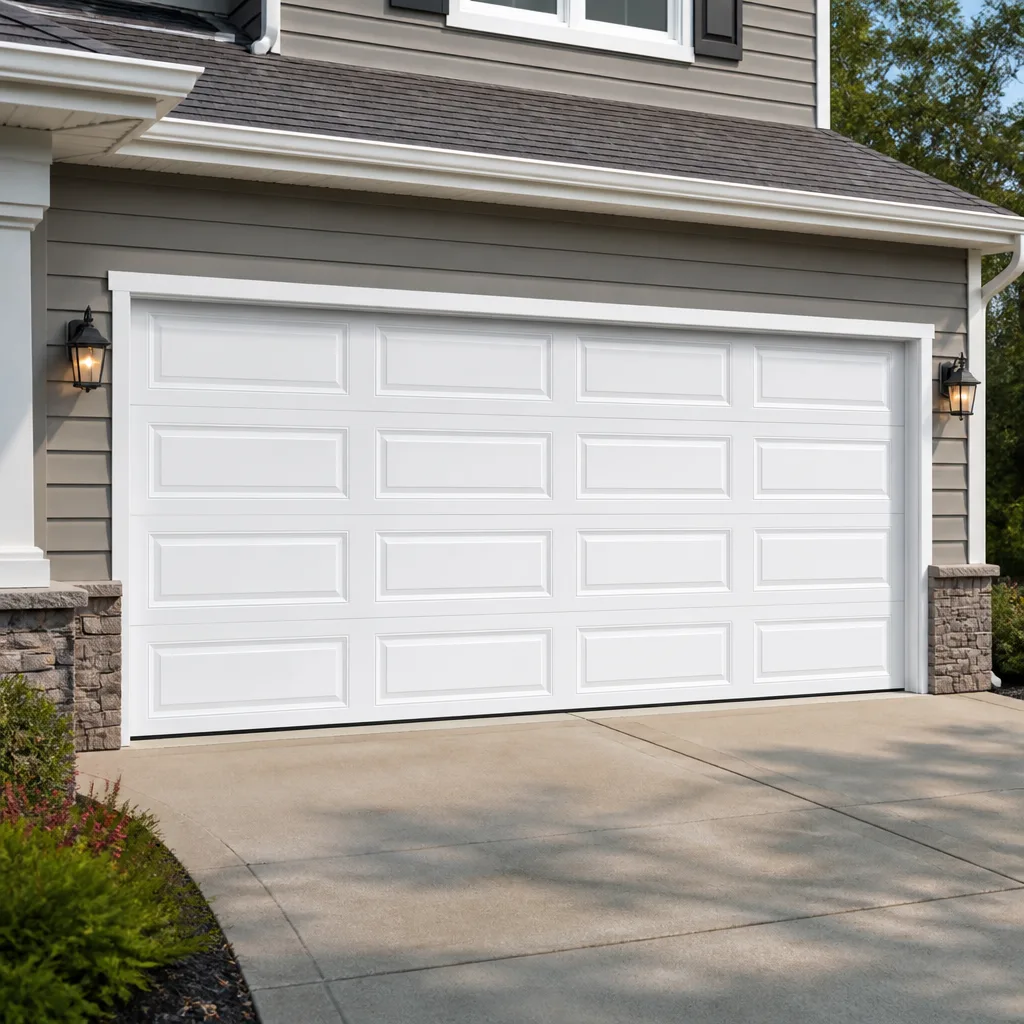
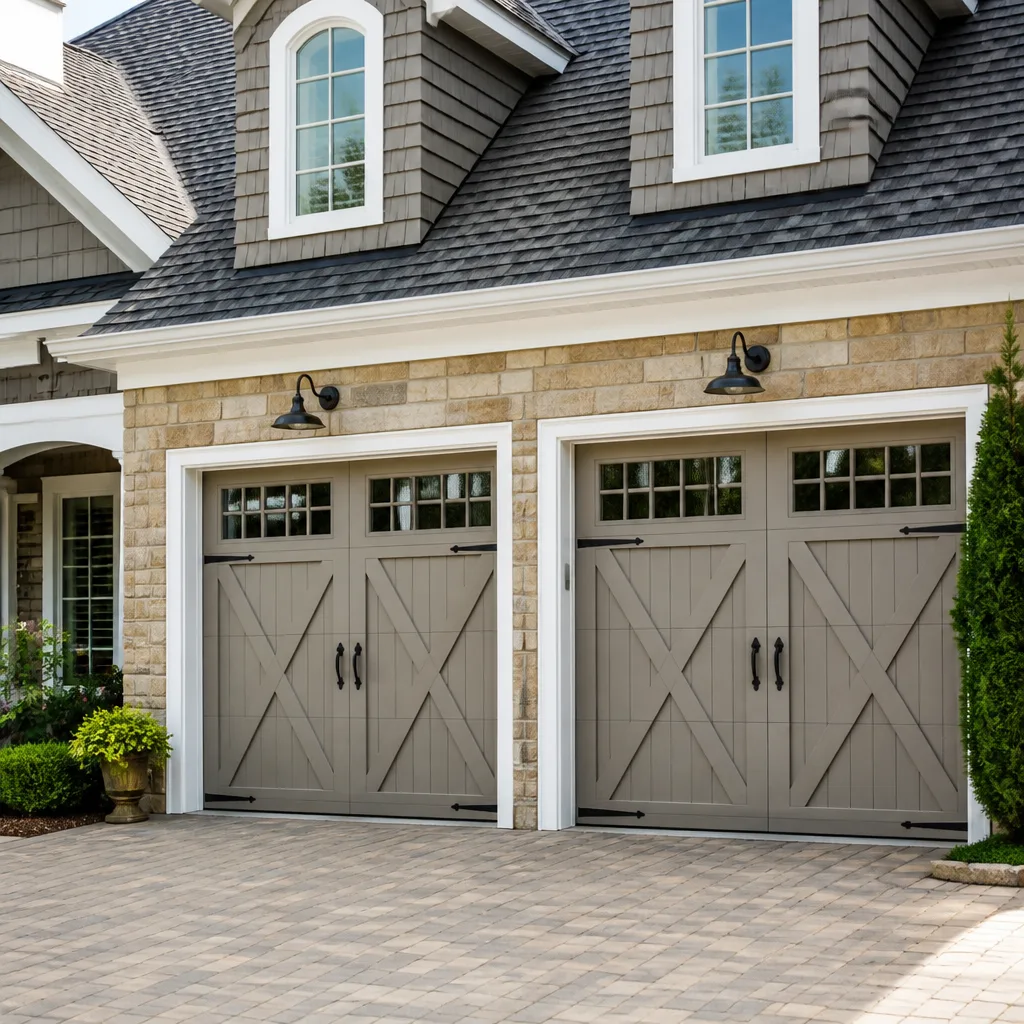
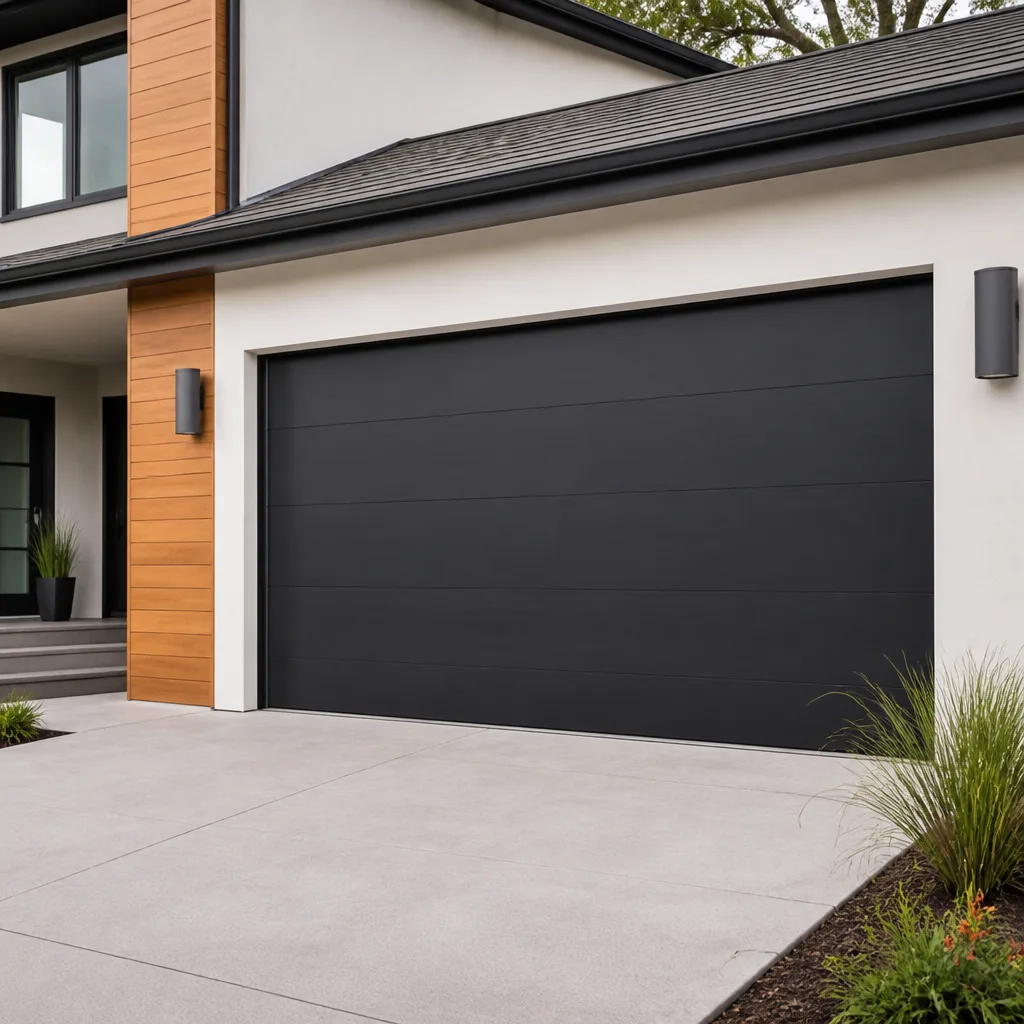
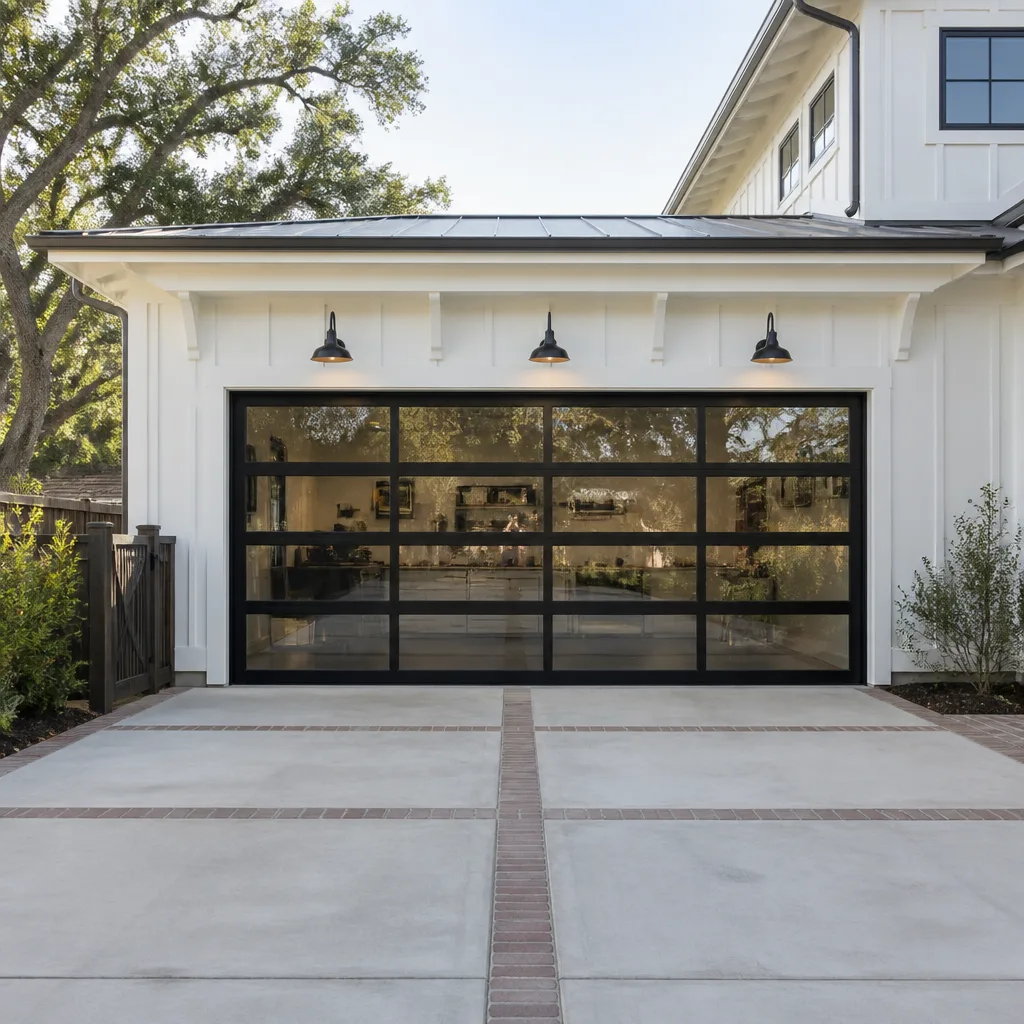
 Before
 After
After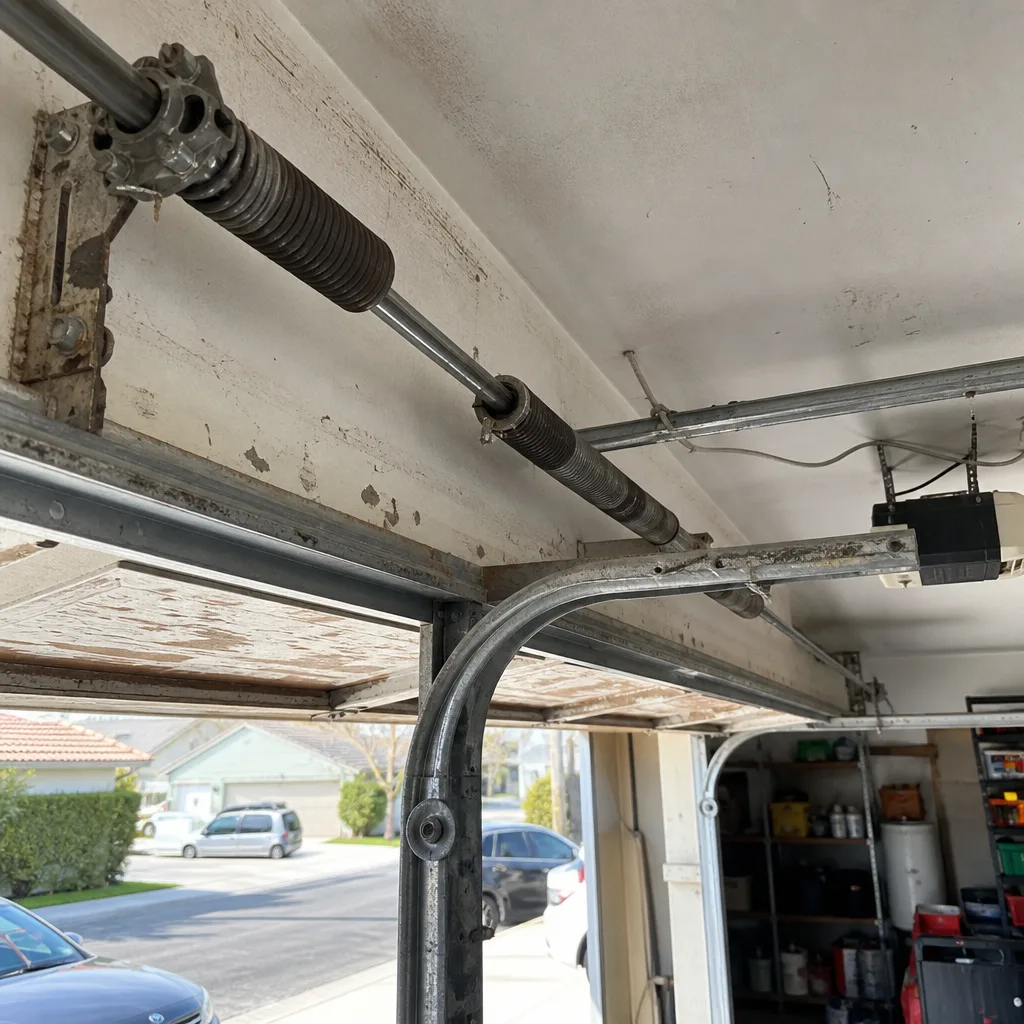 Before
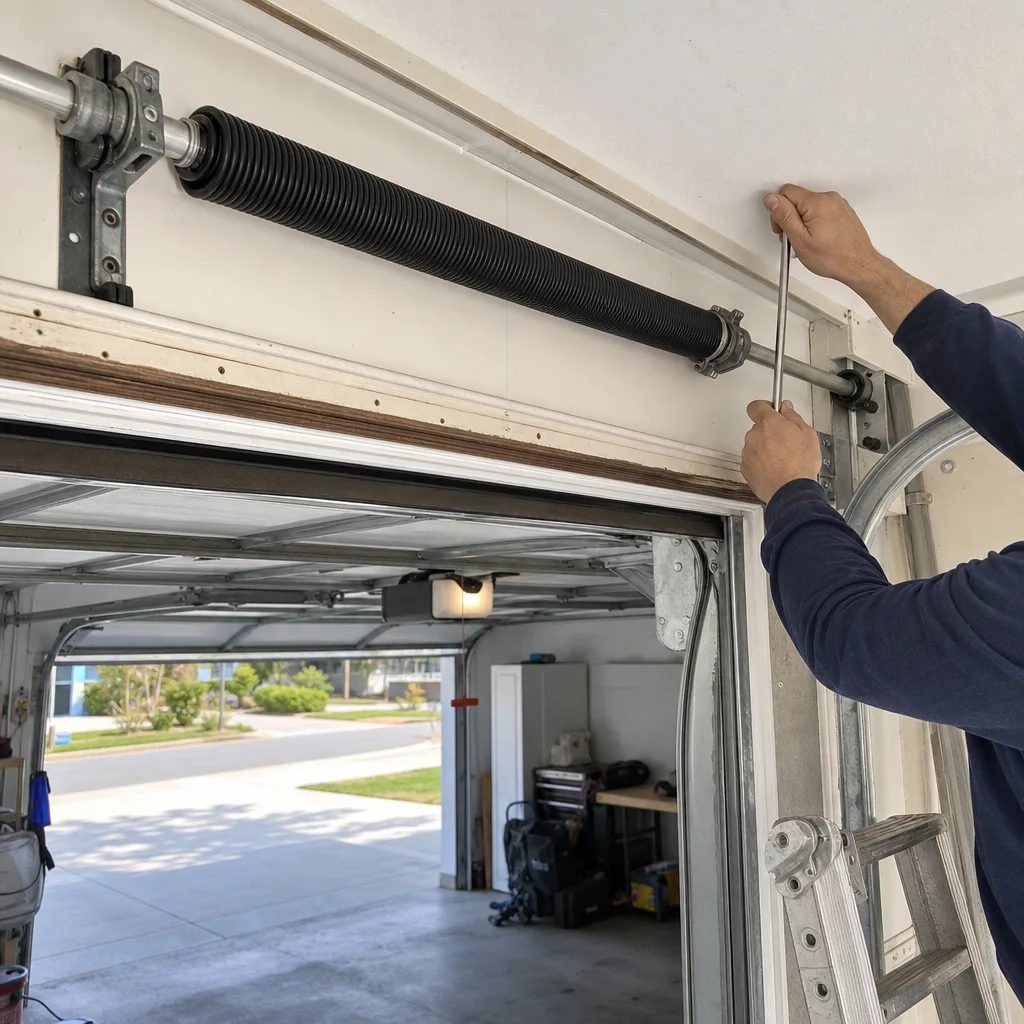 After
After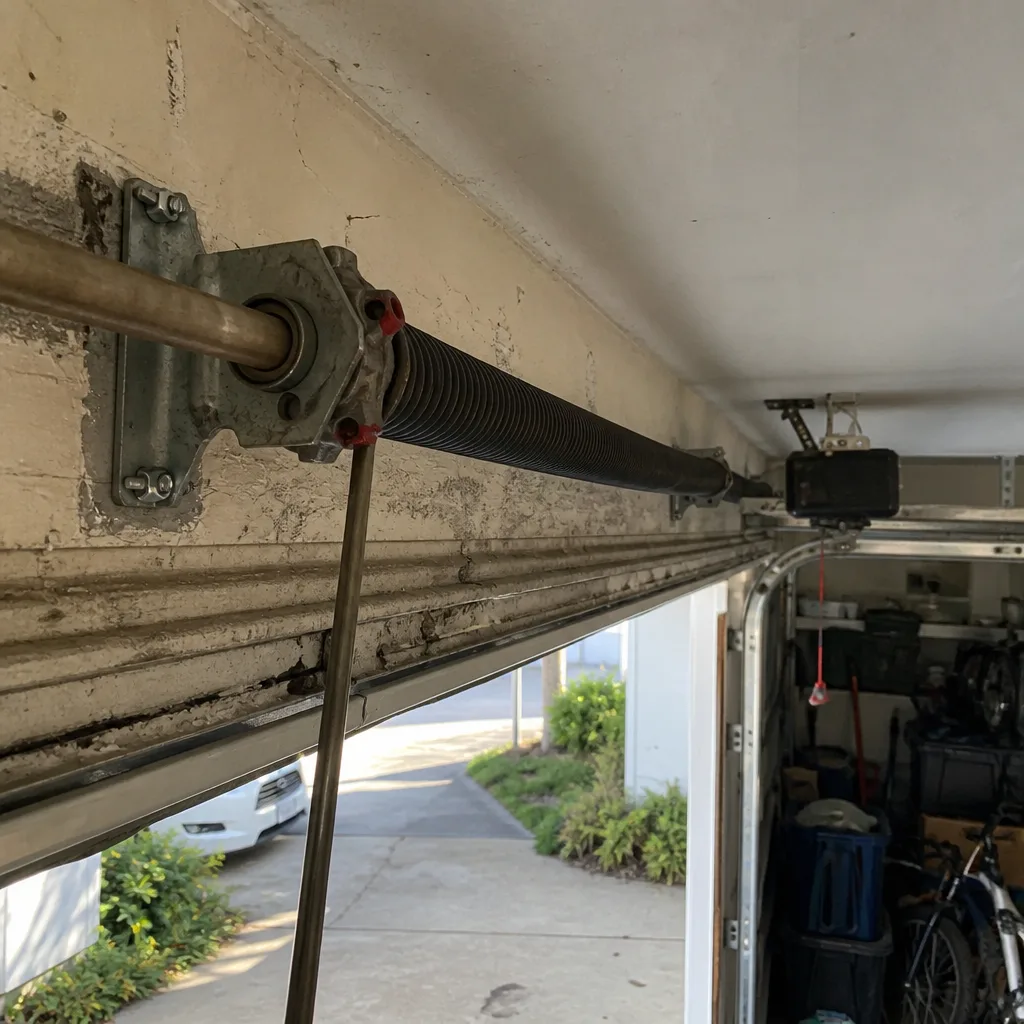 Before
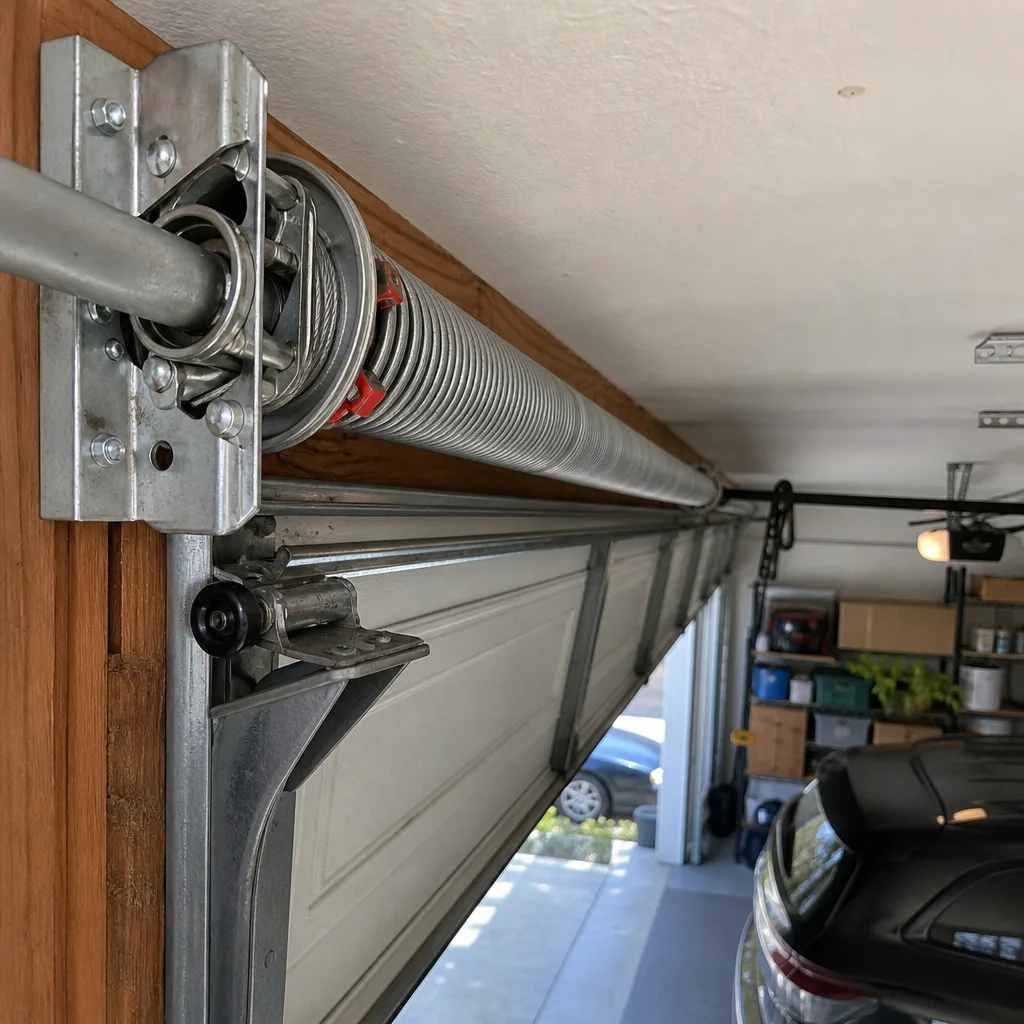 After
AfterThe Complete Guide to Garage Door in Newport Beach
A steel garage door two miles from the Newport Beach shoreline can show measurable surface corrosion in under 18 months - the same door sitting in Riverside would take a decade to reach that point. Most homeowners here discover this the hard way: a spring snaps during the morning commute, or a panel bows after one humid summer, and the repair quote comes as a shock. This guide treats your garage door as coastal infrastructure, not a commodity purchase - and for more guides & resources on protecting your home, explore our full library. You will learn how salt air, marine layer humidity, and UV intensity age each door material differently; why Newport Beach’s HOA corridors restrict your options; which hardware grades actually survive within two miles of the coast; and how to read a quote so the low bid does not become a high surprise on install day.
Quick Answer
Garage doors in Newport Beach require coastal-grade materials and hardware to withstand salt-air corrosion, marine humidity, and intense UV exposure that accelerate wear by 3-5x compared to inland climates. Homeowners should expect to pay 15-25% more for 316 stainless steel hardware, aluminum or fiberglass door materials, and proper sealing than standard inland quotes suggest, but this upfront cost prevents premature failure - see our Garage Door Cost Breakdown: The Newport Beach Homeowner’s Reference for 2026 for detailed pricing. For most Newport Beach homes, a properly specified aluminum or fiberglass door with stainless hardware lasts 15-20 years, while uncoated steel with zinc-plated parts may need major repair or replacement in 7-10 years.
Table of Contents
- How Salt Air Destroys Garage Doors in Newport Beach
- Choosing the Right Door Material for Coastal Zip Codes
- Hardware Grades That Survive Within Two Miles of the Coast
- Navigating Newport Beach HOA Requirements and Aesthetic Rules
- How to Read a Garage Door Quote So the Low Bid Doesn’t Bite
- Repair vs. Replace: A Coastal Wear Decision Matrix
- Maintenance Schedule for Coastal Conditions
- Opener and Brand Considerations for Salt-Air Environments
How Salt Air Destroys Garage Doors in Newport Beach
Newport Beach sits at the center of a coastal microclimate that most garage door manufacturers do not design for. The marine layer pushes inland most mornings from May through October, depositing microscopic salt crystals on every exposed surface. When relative humidity climbs above 70%, those crystals activate into electrolytic corrosion. By afternoon, the sun burns off the fog and UV radiation heats metal surfaces to 140°F or higher, accelerating oxidation cycles. A door in Corona del Mar faces this thermal shock daily. A door in Costa Mesa, three miles inland, might see it twice a week.
The damage pattern depends on material and exposure. South-facing doors in the Lido Peninsula neighborhood take the worst combination: direct UV plus salt spray carried on afternoon onshore winds. We have measured steel door surface temperatures of 155°F on these exposures in July. That thermal cycling fatigues paint and coatings, opening microcracks where salt penetrates. Within 18 months, we regularly see rust bloom at panel seams and along bottom edges where condensation pools.
West-facing doors in Balboa Island face a different problem. The afternoon sun angle is lower, so UV hits horizontal surfaces harder - top panels and header trim weather faster than vertical faces. And the island’s narrower lots mean garages often vent poorly, trapping humid air inside. We have opened Balboa Island garages where the interior humidity matched the exterior marine layer, creating condensation on cold steel tracks every morning.
North-facing doors fare better but are not immune. The marine layer still deposits salt. It just dries slower, extending the active corrosion window. In Harbor Ridge, we see north-facing wood doors develop mold and mildew issues where salt residue feeds fungal growth in shaded areas.
The financial impact is real. A homeowner in Newport Coast who installs a standard-grade steel door with zinc-plated hardware will likely face:
- Surface rust at year 2-3 requiring cosmetic remediation
- Hardware corrosion and binding at year 4-5
- Spring failure due to pitting at year 6-8
- Panel seam failure or track replacement by year 10
The same homeowner who invests in coastal-grade materials from day one typically sees 15-20 year service life with routine maintenance. The upfront cost difference is usually $400-800 on a standard single-car door. Spread across the lifespan, that is roughly $3 per month for hardware that does not seize, springs that do not snap unexpectedly, and a door that does not become an eyesore.
Choosing the Right Door Material for Coastal Zip Codes
Four materials dominate the Newport Beach market: steel, aluminum, wood, and fiberglass composite. Each responds differently to salt air, humidity, and UV. The right choice depends on your home’s exposure, your HOA’s rules, and how long you plan to stay in the house.
Steel: Strong but Vulnerable
Steel remains the most common garage door material nationwide because it is strong, relatively affordable, and available in endless styles. In Newport Beach, it is also the most commonly misapplied material. Standard 24- or 25-gauge steel doors rely on a factory-applied polyester or silicone-modified polyester paint system. These coatings are tested for UV resistance and general weathering, but not for continuous salt-air exposure.
The failure mode we see most: the paint system remains intact visually while microscopic cracks form at panel edges and embossing details. Salt penetrates, the zinc galvanizing layer sacrifices itself over 2-4 years, then base steel rust begins. By the time rust is visible, the panel is often structurally compromised at the seams.
Coastal-grade steel doors do exist. Clopay’s Canyon Ridge and similar product lines use heavier-gauge steel with enhanced paint systems and often a composite overlay that shields the steel substrate. These add $600-1,200 to a typical installation but extend service life significantly. For a Pelican Hill home with ocean exposure, this is usually the minimum viable steel option.
Aluminum: The Coastal Default
Aluminum does not rust. In Newport Beach’s climate, that single property makes it the default recommendation for homes within one mile of the coast. The material forms a stable aluminum oxide layer that self-seals against further corrosion. Even when scratched, the oxide reforms.
The tradeoffs: aluminum is softer than steel, so dents more easily from basketball impacts or wind-borne debris. It also expands and contracts more with temperature swings, which can stress hardware and opener mechanisms over time. And premium aluminum doors with wide glass panels - popular in modern Newport Beach architecture - can run $3,500-6,000 installed, roughly double a comparable steel door.
We specify aluminum most often for homes in the Newport Coast and Corona del Mar hills, where the combination of salt exposure and architectural modernism favors the material. For traditional homes requiring a carriage-house look, aluminum with a wood-grain finish and composite overlays achieves the aesthetic without the maintenance burden.
Wood: Beautiful, Demanding
Real wood garage doors remain specified in Newport Beach’s older neighborhoods and historic districts, particularly around Balboa Peninsula and parts of Lido Isle. Cedar and redwood resist decay naturally but not salt. The marine layer raises wood moisture content repeatedly, accelerating the wet-dry cycles that cause checking, warping, and joint failure.
A wood door in Newport Beach requires refinishing every 2-3 years, not the 5-7 typical inland. We have replaced 8-year-old wood doors in Harbor Ridge that were structurally sound but cosmetically ruined by graying, surface erosion, and water stain. The homeowners loved the look but underestimated the maintenance commitment.
Engineered wood composites and wood-look fiberglass offer alternatives. Clopay’s Canyon Ridge collection uses a steel base with a molded composite skin that mimics wood grain convincingly. These products do not require refinishing and resist salt air well. The compromise is thermal performance - composite skins can delaminate in extreme heat if the substrate adhesive degrades.
Fiberglass: The Overlooked Option
Fiberglass-reinforced polymer doors are rare in the market but well-suited to Newport Beach’s climate. The material is inert to salt, UV-stable, and thermally efficient. Modern formulations resist the brittleness that plagued early fiberglass doors in cold climates.
The limitation is style availability. Most manufacturers offer limited panel designs, and the material does not hold fine embossing detail as crisply as steel or aluminum. For a contemporary home with flat-panel doors, fiberglass deserves consideration. For a traditional home requiring raised-panel or carriage-house detail, aluminum or composite-clad steel usually works better.
Hardware Grades That Survive Within Two Miles of the Coast
The door itself is only half the system. Hinges, rollers, tracks, springs, and fasteners determine whether that door operates smoothly for fifteen years or seizes within three. In Newport Beach, hardware specification matters more than door material because every moving part faces continuous salt exposure.
316 Stainless Steel: The Coastal Standard
Standard garage door hardware uses zinc-plated or galvanized steel. The zinc layer provides sacrificial protection - it corrodes before the base steel - but in salt air, zinc sacrifices rapidly. We have removed zinc-plated hinges from Corona del Mar doors that were frozen solid after four years, the zinc entirely consumed and base steel rusted through.
316 stainless steel contains molybdenum, which resists chloride attack from salt. It does not rely on a coating that can fail. The material costs roughly 3x zinc-plated equivalents, but the service life difference is measured in decades versus years.
For Newport Beach homes, we specify 316 stainless for:
- Hinges and hinge pins - the highest-wear, highest-exposure hardware
- Track mounting brackets and fasteners - where condensation pools at floor level
- Cable drums and bottom fixtures - under constant spring tension and salt exposure
- Spring anchor brackets - failure here can release stored energy dangerously
We do not recommend 304 stainless for coastal applications. The grade lacks molybdenum and will show surface rust within 5-7 years in Newport Beach conditions. Some suppliers sell 304 as “stainless” without specifying grade. Ask explicitly, and verify with a magnet test: 316 is weakly magnetic or non-magnetic depending on work-hardening, while heavily magnetic “stainless” is usually 400-series or plated steel.
Rollers: Nylon vs. Steel
Nylon rollers with sealed ball bearings outperform steel rollers in salt air. Steel roller shafts and bearings corrode, increasing opener strain and eventually causing jump-off-track failures. Sealed nylon rollers eliminate the metal-to-metal corrosion path. We specify 13-ball precision bearings in nylon housings for coastal jobs; the sealed design keeps salt out of the bearing race.
The exception: very heavy wood doors or oversized custom doors may require steel rollers for load capacity. In these cases, we specify stainless steel shafts with bronze or composite bearings, at roughly $18-24 per roller versus $4-6 for standard steel.
Springs: The Hidden Wear Item
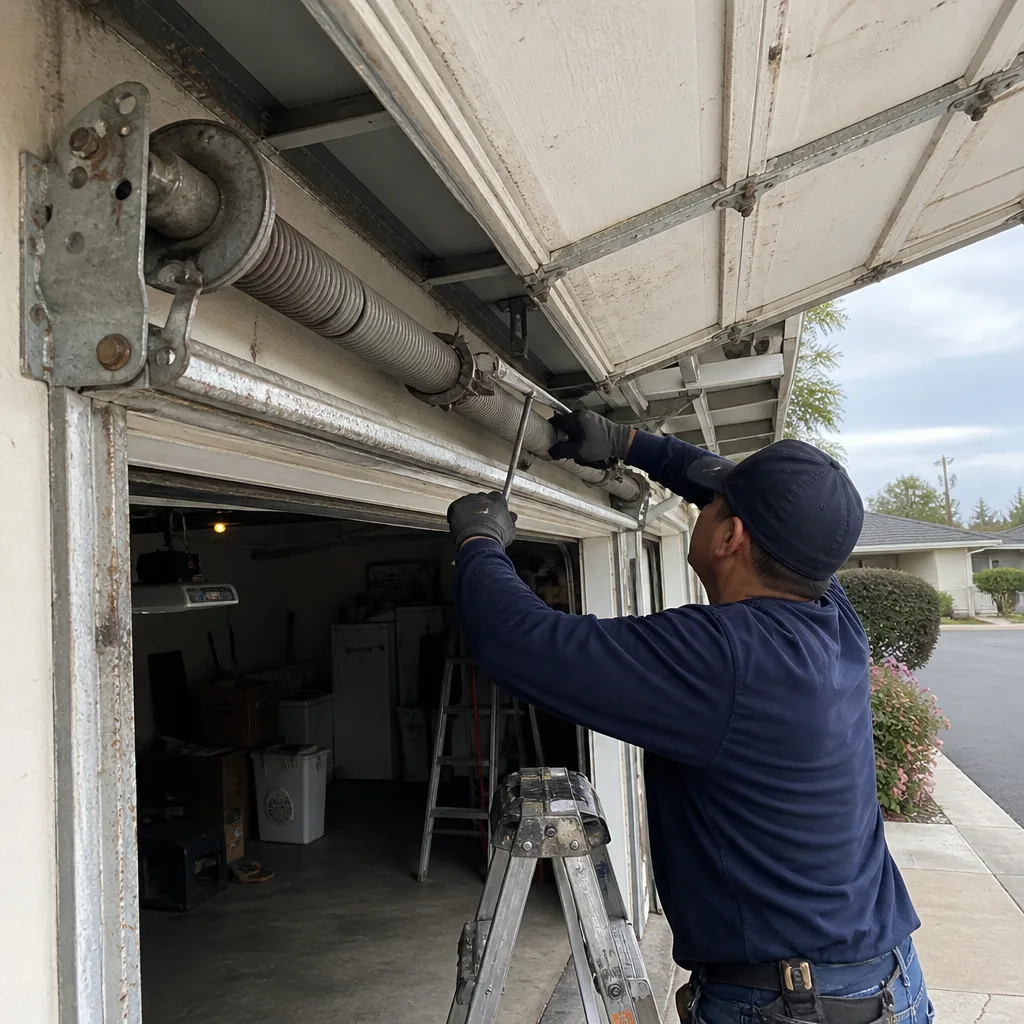
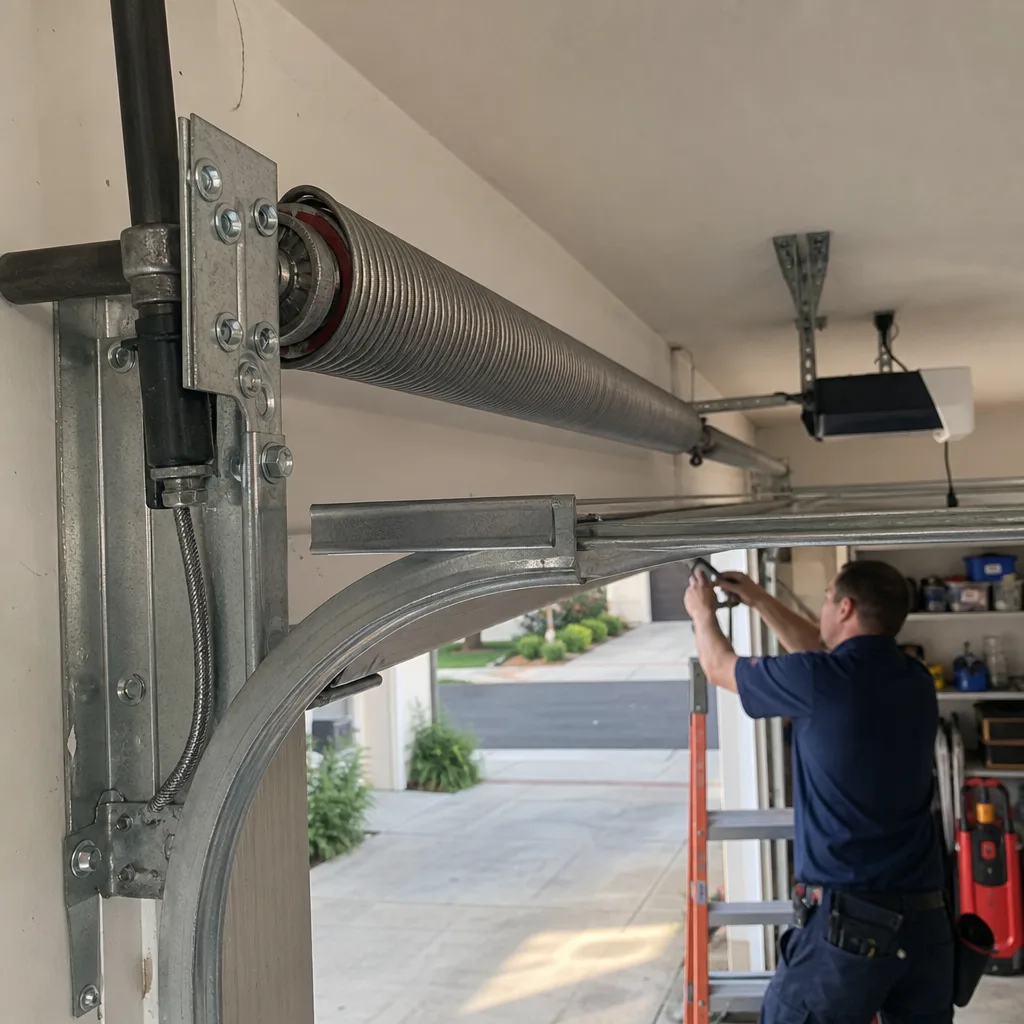
Torsion springs are the most dangerous component in any garage door system and the most commonly neglected in coastal environments. Standard oil-tempered springs are bare steel that corrodes from the surface inward. Salt pitting creates stress risers that lead to premature fatigue failure - often without warning.
Galvanized springs last longer but still corrode eventually. For Newport Beach, we specify coated springs: either powder-coated or with a corrosion-inhibiting polymer dip. The coating adds $40-80 per spring pair but extends life from 7-10 years to 12-15 in salt air.
We do not recommend DIY spring replacement. A standard torsion spring stores enough energy to cause serious injury or death if mishandled. Our technicians are trained to release tension safely, match spring specifications to door weight precisely, and warranty the installation under our Garage Door Repair in Newport Beach service.
Navigating Newport Beach HOA Requirements and Aesthetic Rules
Newport Beach contains some of Orange County’s most architecturally controlled neighborhoods. The HOA corridor from Pelican Hill through Harbor Ridge, Newport Coast, and parts of Corona del Mar imposes design guidelines that can eliminate entire categories of garage doors from consideration. Understanding these constraints before you request quotes prevents wasted time and deposit disputes.
Pelican Hill and Pelican Crest
These communities typically require wood or wood-look doors in traditional raised-panel or carriage-house styles. Color palettes are restricted to earth tones - no bright whites or modern grays. Architectural review committees often require material samples and manufacturer specification sheets before approval. We have seen installations delayed 6-8 weeks while committees review composite products to verify they meet “wood appearance” requirements.
For a Pelican Hill client last year, we sourced a Clopay Canyon Ridge door with a walnut composite overlay that satisfied the committee while providing aluminum-core durability. The key was submitting manufacturer documentation that specified the composite formulation and warranty - committees want evidence the material will not fade or delaminate.
Harbor Ridge
Harbor Ridge permits more material variety but enforces strict proportion and detail rules. Window configurations must match adjacent homes. Hardware decorative handles and hinges must be functional, not applied ornament. We have replaced “faux” strap hinges with working equivalents to pass final inspection.
The community also requires specific paint colors from an approved palette. For a recent installation, we coordinated with the client’s painter to match a custom Sherwin-Williams color to the HOA’s “Weathered Shingle” standard - the door arrived primed, and final coating happened on-site after committee color approval.
Balboa Island and Lido Isle
These island neighborhoods have the oldest housing stock and some of the most prescriptive historic guidelines. Original garage doors on 1920s cottages were often wood swing-out or slide-away designs. Modern replacements must maintain proportional relationships: a door on a 1,200 square foot cottage cannot dominate the facade.
We have adapted modern sectional doors to appear as swing-out units using decorative hardware and careful panel proportioning. The mechanism is standard overhead operation, but the visual impression matches neighborhood character. This adds $400-700 in hardware and labor but prevents aesthetic complaints that can trigger HOA fines.
Newport Coast and Crystal Cove
Newer communities with contemporary architecture often favor flush aluminum or glass-panel doors. The constraint here is typically transparency: some HOAs limit glass area for privacy or energy compliance. We work with manufacturers to specify insulated glass panels with Low-E coating and obscured interlayers that meet both aesthetic and energy requirements.
The practical advice: before requesting any quote, obtain your HOA’s written design guidelines and any required application forms. We provide specification packages for committee review at no charge once a client is in our pipeline. Attempting to install first and seek approval after is a costly error we have seen repeatedly in Newport Beach.
How to Read a Garage Door Quote So the Low Bid Doesn’t Bite
Garage door quotes in Newport Beach vary widely, and the spread often reflects material quality rather than labor efficiency. A quote that seems $800 below competitors may be specifying standard-grade hardware for a coastal environment, or omitting necessary modifications that appear as change orders on install day. Our DIY vs Professional Garage Door: The Newport Beach Homeowner’s Decision Guide explains why professional specification matters.
The Line Items That Matter
Request itemized quotes that separate door, hardware, opener, and labor. Compare these categories individually, not just bottom-line totals. Here is what we typically see in the Newport Beach market for a standard 16×7 double-car door installation:
| Component | Budget Grade (Inland-Spec) | Coastal Grade (Newport Beach) |
|---|---|---|
| Door (steel, insulated) | $1,200-1,500 | $1,600-2,200 |
| Door (aluminum, insulated) | N/A | $2,400-3,200 |
| Hardware (zinc-plated) | $180-240 | Not recommended |
| Hardware (316 stainless) | N/A | $520-680 |
| Opener (chain drive, 1/2 HP) | $280-350 | Not recommended |
| Opener (belt drive, 3/4 HP, battery backup) | N/A | $480-620 |
| Track modification / reinforcement | $0-150 | $200-400 |
| Weather sealing (coastal grade) | $60-90 | $140-200 |
| Labor, removal, disposal | $400-550 | $500-700 |
The “coastal grade” column adds $1,000-1,800 to a typical installation. A low bid that does not specify hardware grade or uses vague language like “heavy duty hardware” is likely specifying zinc-plated components that will fail prematurely.
Questions to Ask Every Bidder
- What specific hardware grade is specified? Request “316 stainless” in writing, not “stainless” or “corrosion-resistant.”
- Is the opener rated for the door weight with battery backup? California requires battery backup on new opener installations; confirm it is included, not an add-on.
- What is the spring cycle rating? Standard springs are 10,000 cycles; high-cycle springs (25,000-50,000) add $80-150 but last 2-3x longer.
- Does the quote include track inspection and replacement if needed? Salt-corroded tracks are not always visible until the old door is removed.
- What is the warranty, and who honors it? Manufacturer warranties cover defects; installation warranties cover labor. A “lifetime” spring warranty from a company that may not exist in five years is worthless.
Our practice at Mainspring Garage Door Co. home is to state the complete, flat price before any work begins. No coastal-grade upcharges appear on install day because we specify correctly from the first visit. If we discover unexpected track corrosion during removal, we photograph it, explain the finding, and quote the repair before proceeding. No surprises on the bill.
Repair vs. Replace: A Coastal Wear Decision Matrix
The standard advice - replace a door at 15-20 years, repair before that - fails in Newport Beach. Salt air accelerates some failure modes while leaving others untouched. A 12-year-old door with corroded hardware but intact panels may justify full hardware replacement. A 7-year-old door with delaminated steel panels and seized rollers may need replacement despite its age.
Repair When:
- Panels are structurally sound with surface rust only, and the door is aluminum, fiberglass, or coastal-grade steel
- Hardware corrosion is moderate - hinges and rollers replaceable, tracks salvageable with cleaning
- Spring failure is isolated, with no evidence of cable wear or drum corrosion
- Opener functions but needs adjustment or safety sensor realignment
- Total repair estimate is under 40% of replacement cost
Replace When:
- Steel panels show through-rust at seams or significant delamination of composite overlays
- Track corrosion has progressed to pitting that affects roller travel smoothness
- Multiple hardware failures indicate systemic under-specification - replacing piecemeal becomes whack-a-mole
- Door lacks modern safety features (pinch-resistant panels, tamper-resistant bottom brackets) and children or pets use the garage
- Energy efficiency upgrade is desired - pre-2010 doors often lack adequate insulation for attached garages
The Newport Beach-Specific Factors
Proximity to shore overrides age in our calculus. A 10-year-old door in Balboa Island with zinc-plated hardware is often closer to end-of-life than a 15-year-old door in Newport Hills with aluminum construction and stainless hardware. We evaluate:
- Material and hardware specification at original installation
- Exposure direction and shading - south-facing, unshaded doors age fastest
- Maintenance history - lubrication frequency, rust treatment, seal condition
- Prior repair quality - aftermarket parts mixed with original hardware often creates galvanic corrosion
For homeowners planning to sell within 2-3 years, repair often makes sense even for marginal doors. For homeowners staying put - our typical client in Newport Beach - replacement with coastal-grade specification prevents the cumulative cost of repeated repairs and the inconvenience of unexpected failures.
Our Garage Door Installation in Newport Beach service includes full specification review and written recommendations with no pressure to proceed. We have advised repair when replacement would have been more profitable, and we have declined repair jobs where replacement was clearly the better value. A square deal means the right recommendation, not the biggest invoice.
Maintenance Schedule for Coastal Conditions
Preventive maintenance extends door life significantly in salt air, but the schedule must match the exposure intensity. Our $89 Seasonal Tune-Up is designed for this climate, and we recommend it twice yearly for homes within one mile of the coast, annually for homes further inland in Newport Beach.
Monthly (Homeowner Tasks)
- Visual inspection of bottom seal and side seals for cracking or displacement
- Listen for grinding, squealing, or irregular sounds during operation
- Check safety reversal by placing a 2×4 flat on the floor in the door path - the door should reverse on contact
- Wipe visible salt accumulation from exterior surfaces with fresh water and soft cloth
Quarterly
- Lubricate hinges, rollers, and springs with silicone-based lubricant (not WD-40, which attracts dust and dries quickly)
- Inspect cables for fraying, rust spots, or broken strands
- Tighten visible fasteners - salt-air thermal cycling loosens hardware over time
Semi-Annually (Professional Service Recommended)
- Spring tension balance test and adjustment
- Track alignment and roller wear measurement
- Opener force settings and safety system verification
- Hardware grade inspection - early corrosion detection before failure
- Weather seal replacement as needed
In our experience, homeowners who follow this schedule catch problems at the $150-300 repair stage rather than the $800-1,500 failure stage. The marine layer does not take days off, and neither should maintenance for coastal garage doors.
Opener and Brand Considerations for Salt-Air Environments
The garage door opener is an electrical-mechanical system exposed to the same salt air as the door itself. Motor housings, circuit boards, and safety sensors all corrode. Brand selection matters less than specification, but certain product lines handle coastal conditions better than others.
Motor and Drive Type
Belt drive openers outperform chain drive in salt air. Chain drives require lubrication that attracts salt dust, creating abrasive paste. Belt drives run cleaner and quieter, important for bedrooms above or adjacent to garages - common in Newport Beach’s vertical architecture. We specify LiftMaster and Chamberlain belt-drive models with DC motors for smooth start-stop operation and reduced mechanical stress.
Jackshaft (wall-mounted) openers eliminate the overhead rail entirely, reducing exposed metal surface area. These units mount beside the door and connect directly to the torsion tube. They cost $200-400 more than ceiling-mounted equivalents but free overhead space and reduce corrosion exposure. We recommend them for high-end installations in Pelican Hill and Newport Coast where ceiling height and clean sightlines matter.
Battery Backup: Required and Practical
California Senate Bill 969 requires battery backup on all new garage door opener installations since July 2019. The requirement exists because garage doors are often the largest moving object in a home and a critical egress path during emergencies. In Newport Beach, where power outages accompany Santa Ana wind events, battery backup also provides operational continuity.
We specify openers with integrated battery backup, not aftermarket add-ons. The integrated designs maintain cleaner wiring and better enclosure sealing against salt air. LiftMaster’s 87504-267 and similar models provide 24 hours of standby power and typically 10-15 full open-close cycles during outage.
Smart Features: Useful, Not Essential
WiFi-connected openers allow remote monitoring and operation through smartphone apps. For our typical client - homeowners 55-75 who have lived in their house for twenty years - this feature is occasionally useful but rarely decisive. We install it when requested but do not upsell it. The core reliability of the opener mechanism matters more than notification features.
That said, for seasonal residents or rental properties in Balboa Island and Lido Isle, remote monitoring provides value. Knowing whether the door was left open after a cleaning service visit, or receiving an alert if the door operates unexpectedly, offers security reassurance.
Our Garage Door Opener in Newport Beach service includes full specification of motor type, drive mechanism, battery backup, and any smart features, with written confirmation of each before installation.
Common Mistakes to Avoid
- Assuming a “stainless steel” claim means 316 grade without verification - 304 and even 400-series magnetic stainless are sold as “stainless” and will fail in salt air.
- Installing an inland-spec door from a big-box retailer without coastal hardware upgrade - the door may carry a manufacturer’s warranty that does not cover salt-air corrosion, leaving you with full replacement cost.
- Neglecting to obtain HOA pre-approval before ordering - Newport Beach architectural committees can require material changes after installation, and the cost of compliance falls on the homeowner.
- Accepting a quote that bundles door, hardware, and opener into a single line item - this obscures specification downgrades and prevents meaningful comparison.
- DIY spring replacement after watching online tutorials - torsion springs store lethal energy, and improper winding or anchor failure causes serious injury annually in Orange County.
- Ignoring minor rust spots as cosmetic - surface rust on steel doors propagates rapidly once paint integrity is compromised, and early treatment costs a fraction of panel replacement.
- Choosing the lowest bid without comparing spring cycle ratings - a 10,000-cycle spring in a frequently used door lasts 3-4 years; a 25,000-cycle spring lasts 8-10 years for modest additional cost.
When to Call a Professional
Call a qualified technician when the door makes grinding or popping sounds, reverses unexpectedly, hangs unevenly, or when springs, cables, or hardware show visible wear. Do not attempt to adjust spring tension or replace cables yourself - these components operate under high tension and can cause serious injury without proper tools and training.
For routine concerns, Mainspring Garage Door Co. offers free estimates in Newport Beach. We arrive with the parts to complete most repairs in a single visit, state the flat price before any work begins, and back every job with our 90-Day Done Right Promise in writing. Call (949) 325-2601 to schedule.
Frequently Asked Questions
Most common repairs in Newport Beach range from $180 for roller and hinge replacement to $340 for spring replacement with hardware inspection. Coastal-grade hardware upgrades add $80-150. We provide exact quotes after inspection, with no charge for the estimate. Call (949) 325-2601 for an exact quote - estimates are free.
A properly specified coastal-grade door with 316 stainless hardware lasts 15-20 years in Newport Beach. Standard inland-spec doors with zinc-plated hardware typically need major repair or replacement in 7-10 years due to accelerated salt-air corrosion. The difference is usually $400-800 in upfront specification.
No. Many neighborhoods, particularly Pelican Hill, Harbor Ridge, Balboa Island, and Newport Coast, have HOA or architectural review requirements that restrict materials, colors, and styles. Always obtain written approval before ordering. We provide specification packages for committee review at no charge.
In Newport Beach, salt-air pitting creates stress concentrations on spring surfaces that accelerate fatigue failure. Standard oil-tempered springs are bare steel and vulnerable. Coated or galvanized springs last longer, but the most reliable solution is high-cycle springs (25,000-50,000 cycles) with corrosion protection, properly specified for your door weight.
316 stainless is necessary within two miles of the Newport Beach coast. The molybdenum content resists chloride attack from salt air. 304 stainless will show surface rust within 5-7 years in these conditions. Verify grade with a magnet test and written specification from your installer.
If any aspect of our work is not right, we return at no charge to make it right, with no paperwork or dispute process required. The promise is stated in writing on every job. It covers labor and installation; manufacturer warranties cover product defects separately.
The Bottom Line
Garage doors in Newport Beach face a coastal environment that ages materials faster than standard specifications anticipate. The right approach treats the door as infrastructure: specify coastal-grade materials and 316 stainless hardware from the start, understand your HOA constraints before ordering, read quotes for specification rather than bottom-line price, and maintain proactively rather than reacting to failure. The upfront cost difference is modest compared to premature replacement or repeated repair. For homeowners who plan to stay in their Newport Beach home, doing it right once beats doing it twice at any price.
Written by Carl Dutton, Owner at Mainspring Garage Door Co., serving Newport Beach since 2016.