
Last updated September 10, 2026
Full 25-point door and opener safety check with every visit - springs, cables, rollers, tracks, and your LiftMaster or Chamberlain opener included
You get a price before we start. It does not change when the truck arrives.
 Before
 After
After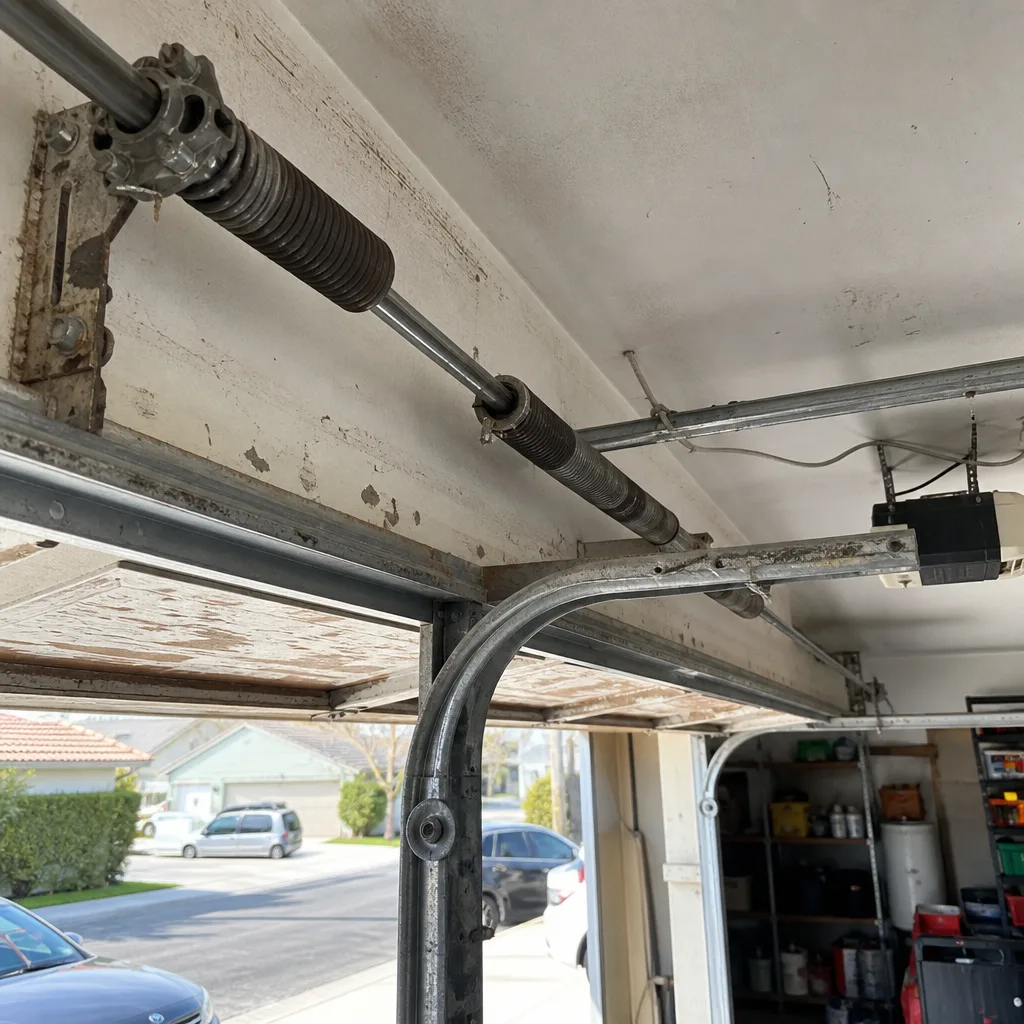 Before
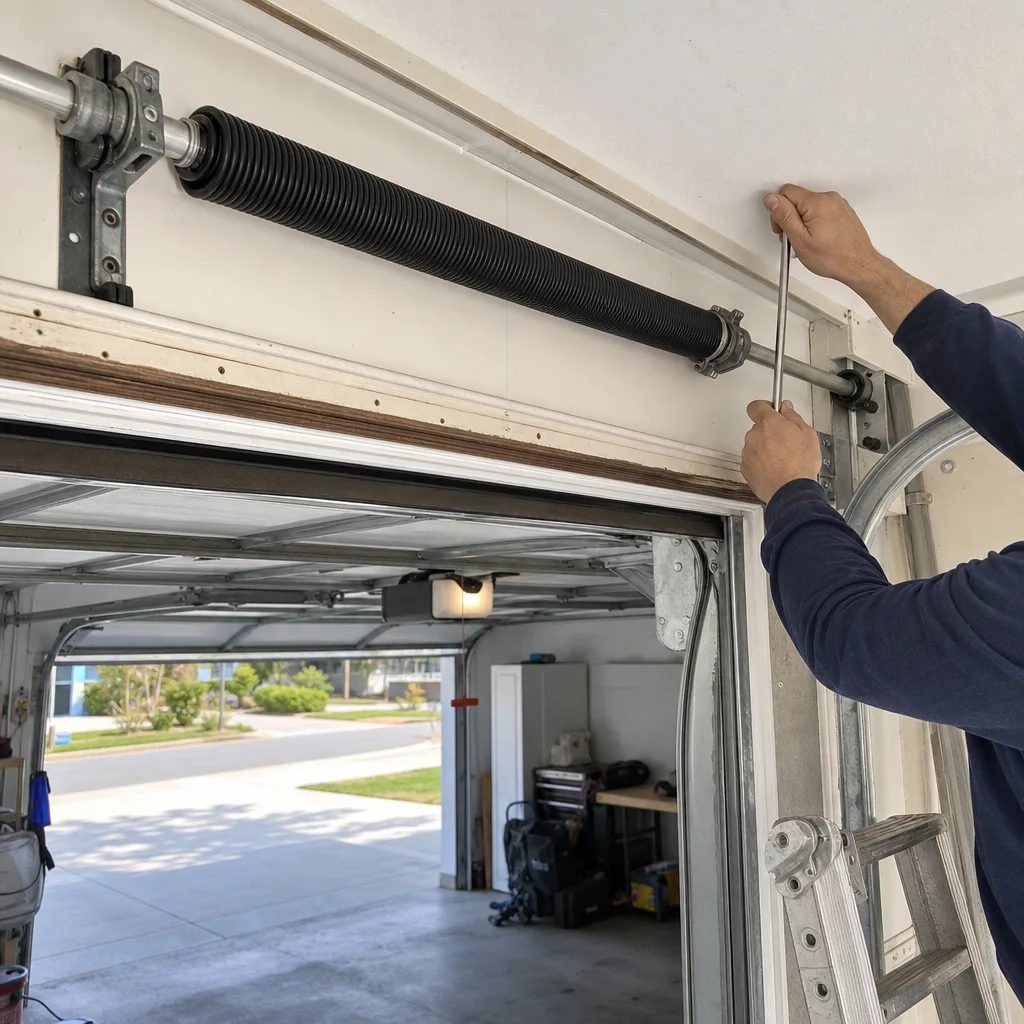 After
After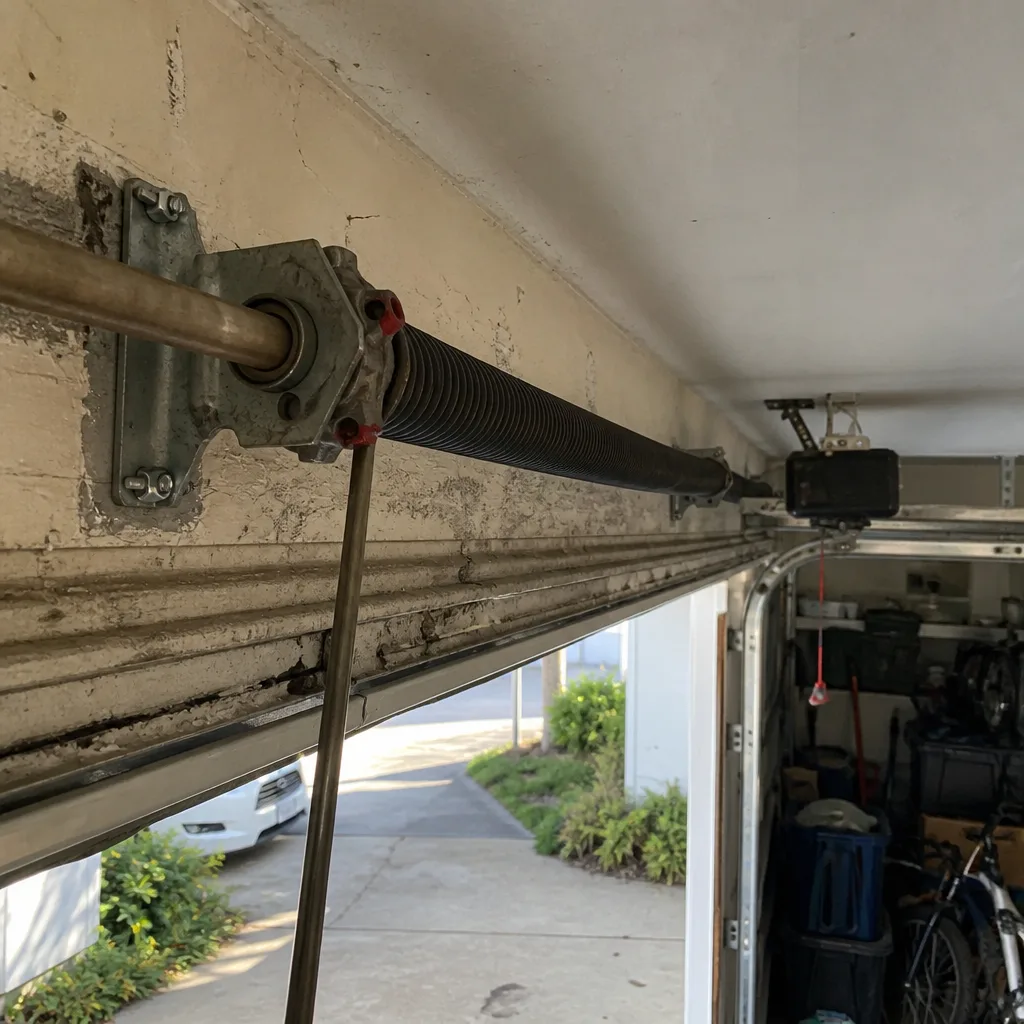 Before
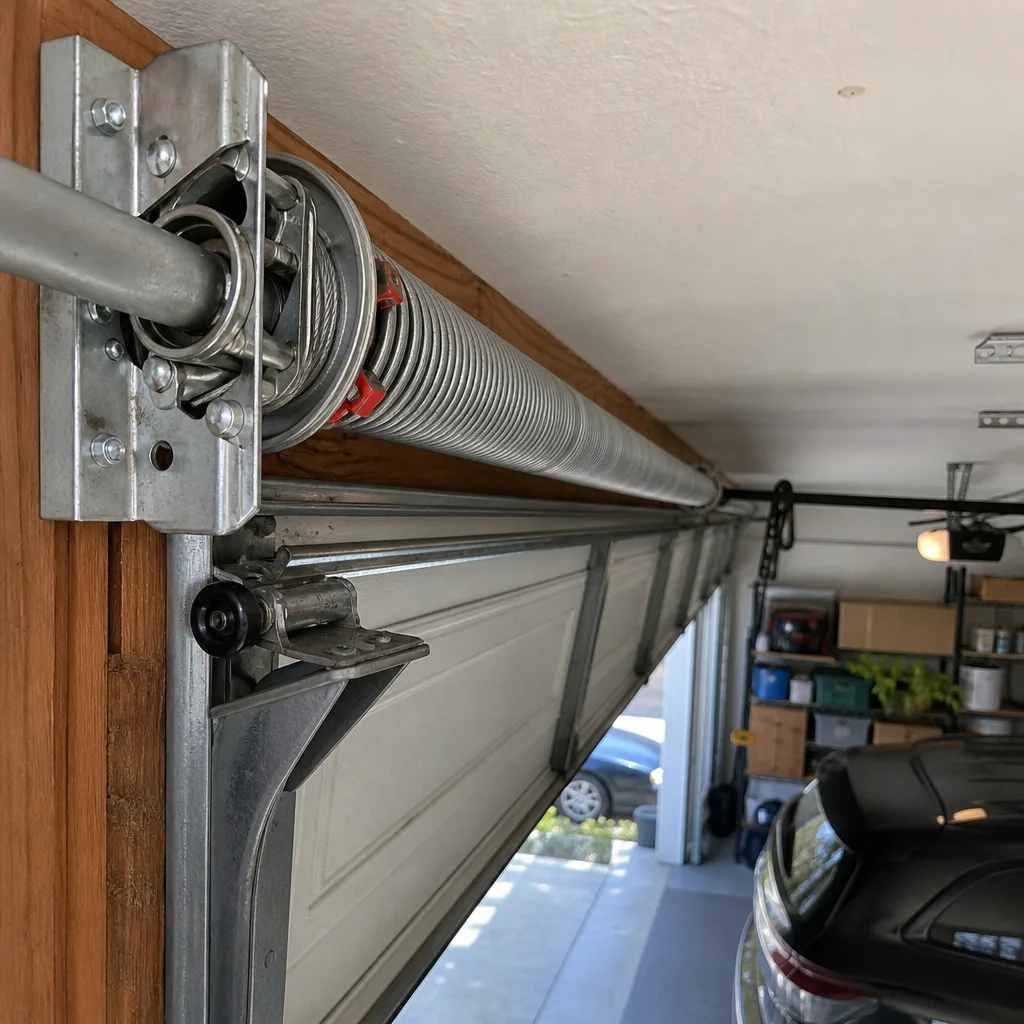 After
AfterDIY vs Professional Garage Door: The Newport Beach Homeowner’s Decision Guide
A standard residential torsion spring stores between 100 and 150 foot-pounds of torque when fully wound. That is roughly the energy of a car door slamming shut on a finger, applied to whatever is in its path if the winding bar slips. In our 42 years serving Orange County, we have met dozens of capable Newport Beach homeowners who are handy with tools, careful with measurements, and genuinely skilled around the house. Most of them have no business touching a garage door spring. This guide draws the line precisely: which tasks are genuinely safe for a determined DIYer, which ones carry injury risk that no amount of YouTube skill can eliminate, and how to think about the real cost of each path. For more guides & resources on keeping your garage door safe and functional, explore our blog.
Quick Answer
Most Newport Beach homeowners can safely handle weatherstrip replacement, sensor realignment, remote programming, and cosmetic panel touch-ups. Any work involving torsion springs, cable drums, or high-tension hardware should be left to a licensed professional. The injury risk on spring work is not about skill level; it is about stored mechanical energy that releases without warning.
Table of Contents
- The Physics of Danger: Why Torsion Springs Are Different
- Safe DIY Tasks: What a Capable Homeowner Can Handle
- Never DIY: Tasks That Carry Genuine Injury Risk
- Real Cost Comparison: DIY vs Professional in Newport Beach
- California Permits, Codes, and Resale Disclosure
- The Middle Path: Buying Parts, Hiring Labor
- When to Call a Professional
- Frequently Asked Questions
The Physics of Danger: Why Torsion Springs Are Different
Most home repair risks are obvious. A ladder can tip. A saw can cut. These are visible hazards, and careful people can manage them. Torsion springs are invisible hazards. They look like thick coils of metal sitting quietly above your door. They are not quiet inside.
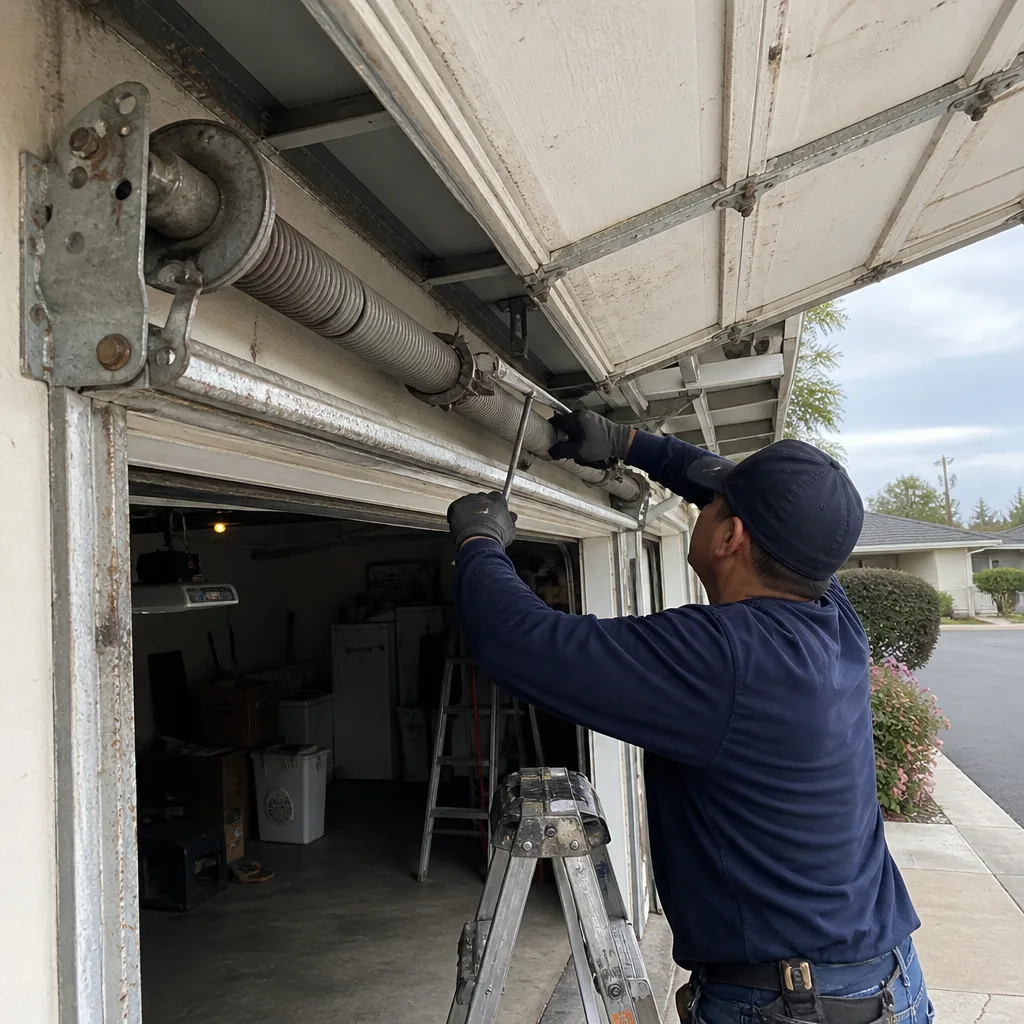
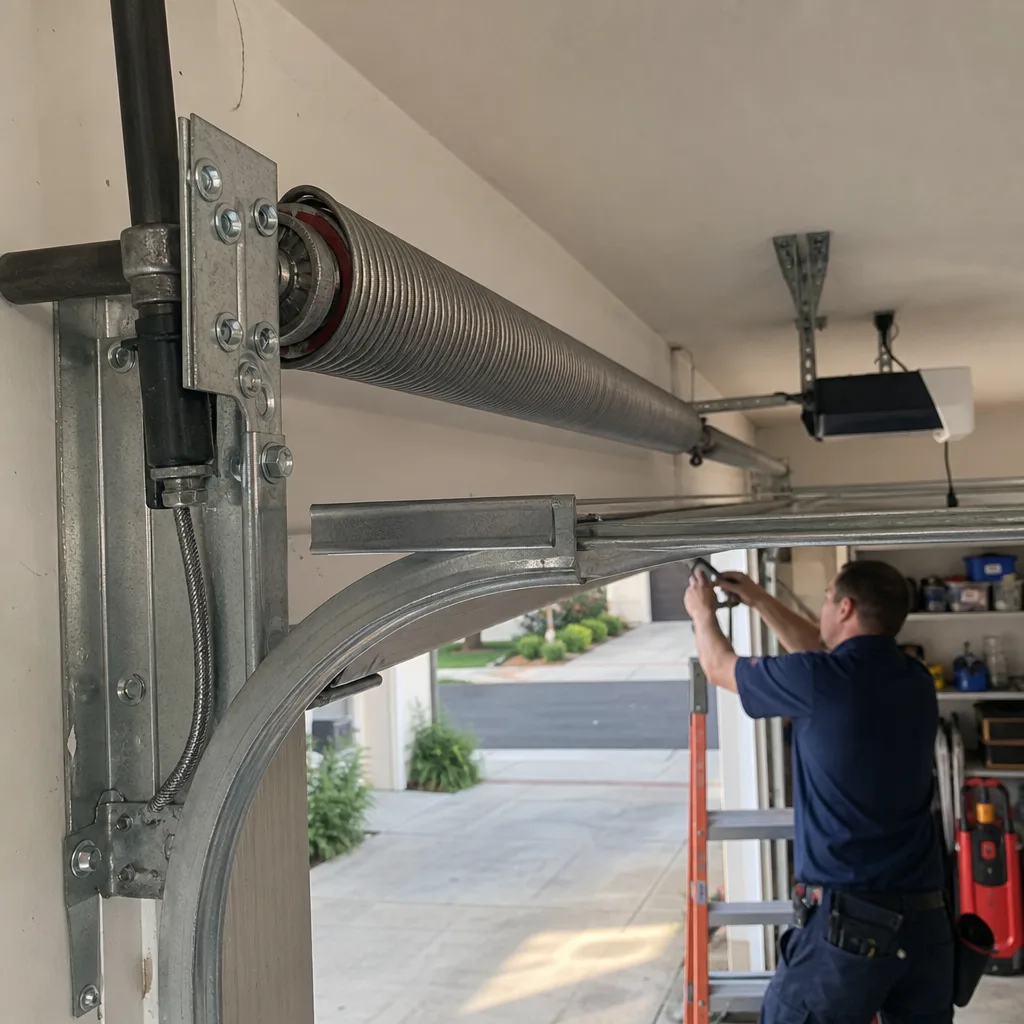
A standard 16-foot wide garage door in a Newport Beach home, common in the Harbor View Hills and Eastbluff neighborhoods, uses two torsion springs that together store enough energy to lift 150 to 250 pounds of door weight. The spring is wound tight, typically 7.5 to 8 full turns for a standard 7-foot door. Each turn adds roughly 12 to 15 foot-pounds of torque. When the spring breaks, that energy releases instantly. If a homeowner attempts to wind or unwind a spring with improper bars, or if the spring is gripped with pliers instead of winding bars inserted properly into the cones, the bar can slip. The spring then spins with enough force to break bones, cause deep lacerations, or throw the user off a ladder.
The danger is not complexity. Many homeowners are smart enough to follow the steps. The danger is that the penalty for a single small error, a moment of inattention, or a slightly worn winding bar, is catastrophic injury. We have seen experienced mechanics injured by springs. The difference is that professionals use specific tools, specific techniques, and specific body positioning developed over thousands of repetitions. A homeowner doing this once cannot develop that embodied knowledge.
Extension springs, the older type that run parallel to the horizontal tracks, carry less stored energy per spring but present a different hazard. When they break, they can whip through the garage. Safety cables, required by modern code, contain this. Many older Newport Beach homes in the Dover Shores and Lido Isle areas still have original extension spring systems without safety cables. If you have these, do not adjust them. Call a professional.
Safe DIY Tasks: What a Capable Homeowner Can Handle
Not every garage door task involves stored energy. Several maintenance and minor repair jobs are genuinely appropriate for a careful homeowner with basic tools. Here is the complete list, drawn from our full Garage Door Repair Maintenance Checklist for Newport Beach Homeowners.
1. Weatherstrip Replacement
The rubber or vinyl seal at the bottom of your door degrades in Newport Beach’s salt air and UV exposure, typically lasting 3 to 5 years. Replacement requires no spring contact. Unplug the opener, raise the door manually to about waist height, and remove the old seal from the retainer channel. Slide the new seal in from one end. A helper makes this easier. Cost: $15 to $35 for the seal, 30 to 45 minutes.
2. Safety Sensor Realignment
Photo-eye sensors near the floor on each side of the door must face each other precisely. If the door reverses for no apparent reason, or the opener light blinks, check these first. Clean the lenses with a soft cloth, verify both LEDs are lit, and loosen the wing nuts to adjust angle until both lights glow steady. This solves perhaps 30 percent of “my opener does not work” calls we receive in Newport Beach.
3. Remote and Keypad Programming
Every major manufacturer, including LiftMaster, Chamberlain, Genie, and Craftsman, publishes clear programming instructions. The “Learn” button on the opener motor unit, typically purple, yellow, or red depending on the Security+ generation, puts the unit in pairing mode. Press it, then press the remote button within 30 seconds. For keypads, enter the temporary PIN, press Learn, then enter your chosen code. Keep the manual or photograph the sticker inside the opener cover that lists the radio frequency and Security+ version.
4. Lubrication of Moving Parts
Use a silicone-based spray or white lithium grease on the rollers, hinges, and bearing plates. Do not lubricate the track itself; the rollers need friction to roll rather than slide. Do not touch the spring. This 20-minute task, done annually, reduces noise and wear. Our Garage Door Repair in Newport Beach page notes the specific lubricants we use for coastal corrosion resistance.
5. Cosmetic Panel Touch-Up
Steel door scratches can be touched up with automotive primer and color-matched paint. For wood doors, common in the historic Balboa Peninsula cottages, sand lightly and apply exterior-grade stain or paint. This is purely aesthetic and carries no mechanical risk.
6. Tightening Loose Hardware
Roller brackets, hinge screws, and track bolts loosen over cycles. With the door closed and opener unplugged, check each fastener with a socket wrench. Do not touch the bottom roller bracket; it is under cable tension. Tighten only what is clearly loose, and stop if any bracket seems bent or damaged.
That is the complete list. If a task is not on this list, it likely involves components under tension or load that require specific training.
Never DIY: Tasks That Carry Genuine Injury Risk
These tasks share a common feature: they involve components that are under load, under tension, or structurally critical to the door’s balance. The risk is not theoretical. We have responded to emergency calls in Newport Beach where a homeowner’s attempted repair created a more dangerous situation than the original problem.
Torsion Spring Replacement or Adjustment
We covered the physics above. Here is the practical reality: even with proper winding bars, spring work requires knowing the correct wire size, inner diameter, and length to match the door weight. A mismatched spring will either fail prematurely or over-torque the opener. The winding process itself, typically 30 to 40 quarter-turns for a standard door, must be done with the body positioned to the side of the winding cone, never in line with the bar. One slip, and the bar becomes a projectile. We do not recommend this task under any circumstances for homeowners.
Cable Replacement or Drum Adjustment
The lift cables run from the bottom brackets to the cable drums at the end of the torsion shaft. When the spring is wound, these cables are under hundreds of pounds of tension. A cable that slips off the drum can whip unpredictably. Replacing a cable requires releasing spring tension first, which returns us to the hazard above. The sequence matters: wrong order, and the door can drop or the cable can snap.
Bottom Bracket Replacement
The bottom brackets connect the lift cables to the door. They are under constant cable tension whenever the door is closed. Removing these brackets without first detensioning the system causes the cable to retract into the drum at high speed. This is not a hand-trapping hazard; it is a laceration and impact hazard.
Track Realignment or Replacement
Vertical and horizontal tracks must be parallel and plumb within precise tolerances, typically 1/4 inch over the door height. Improper track alignment causes the door to bind, which overloads the opener and can twist the door sections. Worse, a door that jumps the track can fall. Track work requires the door to be supported safely, which most homeowners cannot do without proper jacks or supports.
Spring Conversion (Extension to Torsion)
Some older Newport Beach homes, particularly 1960s and 1970s builds in the Newport Heights area, still have extension spring systems. Converting to torsion springs is a significant upgrade for safety and door balance, but it requires a complete hardware replacement: new shaft, drums, cables, bearing plates, and springs sized precisely for the door. This is a full installation job, not a maintenance task.
Opener Mounting and Electrical Connection
While programming a remote is safe, mounting a new opener to the ceiling header and connecting 120-volt power involves structural and electrical work. The header must support the operator’s torque reaction. Improper mounting causes the opener to shake loose over time. Electrical work in California requires compliance with the National Electrical Code and local amendments. A permit is technically required for new electrical circuits.
Real Cost Comparison: DIY vs Professional in Newport Beach
The DIY-vs-professional debate usually starts with money. Here are actual numbers for the four most common garage door jobs in the Newport Beach market, based on our 2024-2025 service data and current parts pricing from regional suppliers. See our detailed Garage Door Cost Breakdown: The Newport Beach Homeowner’s Reference for 2026 for expanded pricing.
Spring Replacement (Pair of Torsion Springs)
| DIY parts only | $80 - $180 for springs, $40 - $80 for winding bars, $25 - $50 for cable set if needed |
| DIY parts + reasonable time value | $145 - $310 parts + 4 to 6 hours first-time effort at median Orange County hourly wage (~$35) = $285 - $520 total |
| Professional flat-rate, Newport Beach | $220 - $380 including parts, labor, warranty, and disposal; most completed in 45 to 90 minutes |
The professional price includes the correct spring specification, which most homeowners get wrong on the first attempt. We have replaced DIY springs that were oversized, undersized, or the wrong inner diameter within six months of installation. The second spring purchase erases any savings.
Opener Replacement (Mid-Grade Chain or Belt Drive)
| DIY parts only | $280 - $450 for Chamberlain, LiftMaster, or Genie mid-grade unit; $40 - $80 rail extension for 8-foot door |
| DIY parts + time value | $320 - $530 parts + 3 to 5 hours at $35/hour = $425 - $705 total |
| Professional flat-rate, Newport Beach | $450 - $650 including unit, installation, disposal, programming, and 90-day warranty |
The professional installation includes proper header reinforcement, safety sensor alignment and testing, force-limit adjustment for the specific door weight, and travel limit programming. These settings affect safety and opener longevity.
Cable Replacement (Pair)
| DIY parts only | $25 - $50 for cable set; requires spring detensioning first |
| DIY parts + time value | $25 - $50 parts + 2 to 3 hours + spring detensioning risk = not recommended |
| Professional flat-rate, Newport Beach | $140 - $220 including detensioning, cable replacement, rebalancing, and testing |
Full Door Replacement (16×7 Insulated Steel, Installed)
| DIY purchase + self-install | $800 - $1,400 for Clopay or Amarr mid-grade door; $200 - $400 for hardware kit; requires 2 to 3 people, 6 to 10 hours, spring winding tools |
| DIY + time value + tool rental | $1,000 - $1,800 + $210 - $350 time + $80 - $150 tool rental = $1,290 - $2,300 |
| Professional installed, Newport Beach | $1,600 - $2,800 including door, hardware, springs, installation, haul-away, and warranty |
For door replacement, the professional path includes measurement verification, which prevents the common error of ordering a door that does not fit the opening or headroom constraints. Many Newport Beach homes have low headroom or unusual jamb conditions, particularly in the custom homes above Corona del Mar.
Our Garage Door Installation in Newport Beach page details the measurement and selection process we use for these jobs.
California Permits, Codes, and Resale Disclosure
California contractor licensing law affects garage door work more than most homeowners realize. Here is what matters for Newport Beach properties.
When a Permit Is Required
New garage door installations require a building permit in Newport Beach. The City of Newport Beach Building Division enforces the California Building Code, including wind load requirements for coastal exposure. Replacement of an existing door in the same opening typically does not require a permit if the door is the same size and type. Adding windows, changing to a wind-rated door in a high-velocity zone, or altering the opening size triggers permit requirements.
Electrical Work for Openers
New electrical circuits for garage door openers require an electrical permit. Extension of an existing garage outlet typically does not, if done with proper gauge wire and protection. Hardwired openers, increasingly common with battery-backup models, require permit and inspection.
Contractor Licensing
Any garage door work exceeding $500 in labor and materials must be performed by a contractor licensed by the California Contractors State License Board. The relevant classification is C-61/D-28 (Doors, Gates, and Activating Devices). An unlicensed person performing work over $500 is operating illegally, and the homeowner has no recourse through the CSLB if the work fails.
Resale Disclosure Obligations
California’s Transfer Disclosure Statement requires sellers to disclose alterations made without permits. Unpermitted garage door work, particularly structural modifications or unpermitted electrical, must be disclosed. This does not automatically block a sale, but it can trigger buyer requests for correction, retroactive permits, or price adjustments. In Newport Beach’s active market, where homes in the $2 million to $5 million range are common, disclosure issues can delay escrow.
For homeowners planning to stay, this matters less. For those considering sale within five years, professional installation with proper documentation protects value. We provide permit assistance as part of our installation service when required.
The Middle Path: Buying Parts, Hiring Labor
Some homeowners want to source their own parts to control quality or capture wholesale pricing, then hire a technician for installation only. This can work, but the economics are specific to each job and the Newport Beach parts market.
When It Can Save Money
Remotes, keypads, and weatherstrip are consumer items with minimal markup. Buying these yourself and installing them, or having us install them during a service call, makes sense. We charge only labor for installation of customer-supplied accessories, typically 15 to 30 minutes.
Decorative hardware, window inserts, and specialty handles are sometimes found online at prices below our dealer cost. We will install customer-supplied decorative items if they fit properly and do not affect door balance or safety systems.
When It Usually Does Not Save Money
Springs, cables, drums, and openers are different. Our wholesale pricing from distributors, combined with volume purchasing, typically matches or beats retail prices at hardware stores or online. More importantly, we warranty parts we supply. If a customer-supplied spring fails in 30 days, the labor to replace it is billable. If our spring fails, we return at no charge under our 90-Day Done Right Promise.
Shipping time is another factor. A homeowner who orders a spring online waits 3 to 7 days. Our trucks carry the 12 most common spring configurations for Newport Beach door sizes. Most jobs finish in one visit.
Brand Compatibility Issues
Garage door parts are not universally interchangeable. A Clopay door uses specific hinge spacing. Wayne Dalton uses a proprietary bottom bracket system on some models. Amarr doors have specific track radii. A homeowner who buys a “universal” part that does not fit pays twice: once for the wrong part, once for the correct one. Our technicians are factory-familiar with all major brands and carry brand-specific hardware.
If you are considering the middle path, call us first. We will tell you honestly whether your plan saves money or creates headaches. Our Garage Door Opener in Newport Beach page lists the specific models and accessories we stock for same-day installation.
When to Call a Professional
Call a professional when the task involves any component under tension or load, when the job requires a permit, when the door is stuck in a partially open position, or when you have attempted a repair and the problem persists or worsens. A door that reverses unpredictably, makes loud popping sounds, or has a visible gap in a spring is not a candidate for further DIY investigation.
In Newport Beach, salt air accelerates corrosion of springs and cables. A spring that looks intact may have micro-fractures near the anchor cones. This is not visible to an untrained eye. We inspect for this on every service call.
Mainspring Garage Door Co. offers free estimates in Newport Beach. Call (949) 325-2601. A live person answers, including nights and weekends. We will assess the situation, quote a flat price before any work begins, and complete most repairs in a single visit with parts already on the truck.
Common Mistakes to Avoid
- Using pliers or screwdrivers as winding bars. Torsion springs require solid steel winding bars inserted fully into the cone. Pliers slip. Screwdrivers shatter. We have seen the aftermath in Newport Beach garages, and it is not minor.
- Replacing only one broken spring on a two-spring door. Springs fatigue together. The unbroken spring is near failure. Replacing one guarantees a second service call within months, often weeks.
- Ignoring the door balance after opener installation. A new opener will lift an unbalanced door, but the motor works harder and fails early. Test balance by disconnecting the opener and lifting manually. If the door does not stay at waist height, the springs need adjustment.
- Buying springs by door weight alone. Spring specification requires wire gauge, inner diameter, length, and wind direction. A spring with correct lift capacity but wrong dimensions will bind on the shaft or coil bind in the wound state.
- Neglecting safety cable inspection on extension spring systems. Many older Newport Beach homes lack these cables entirely, or the cables are frayed. A broken extension spring without a safety cable becomes a projectile.
- Assuming all openers fit all doors. Low-headroom track kits, high-lift applications, and jackshaft openers for limited ceiling space require specific compatibility. A standard chain drive will not work in a garage with only 4 inches of headroom above the door.
- Skipping the force-limit test after any adjustment. The opener’s force setting must be tested with a 2×4 laid flat under the door. The door should reverse on contact. This is not optional; it is a federal safety requirement under UL 325.
Frequently Asked Questions
Professional torsion spring replacement in Newport Beach typically runs $220 to $380 for a standard residential door, including both springs, cables if needed, labor, and warranty. DIY parts alone cost $80 to $180, but incorrect spring specification often leads to premature failure and a second purchase. Call (949) 325-2601 for an exact quote; estimates are free.
You should not replace even one spring yourself. The injury risk from stored torque is severe, and replacing one spring on a two-spring door is poor practice. The remaining spring has the same cycle count and will fail soon. A professional replaces both, balances the door, and warranties the work.
No. At Mainspring Garage Door Co., we state the flat price before any work begins. The quote you approve is the price on the bill. If we discover additional issues, we discuss them and get approval before proceeding. No surprises on the bill.
Yes. Our trucks are stocked with springs, cables, drums, rollers, hinges, and openers from all major brands. Most repairs in Newport Beach are completed in a single visit. We do not leave to order parts and return later.
Salt air accelerates corrosion of springs, cables, and hardware. Stainless steel or galvanized components last longer but cost more. We recommend annual lubrication with corrosion-resistant formulations and more frequent inspection of coastal-facing doors, particularly in the Balboa Peninsula and Lido Isle areas where salt spray is direct.
A building permit is required for new installations and for replacements that change the door size, type, or structural requirements. Direct replacement of an existing door in the same opening typically does not require a permit. We handle permit applications when needed as part of our installation service.
The Bottom Line
The right frame for the DIY-vs-professional question is not money or pride. It is physics and risk. A capable Newport Beach homeowner can handle weatherstrip, sensors, remotes, and lubrication safely and economically. Any task involving torsion springs, cables under load, or structural balance carries injury risk that no amount of online research eliminates. The professional cost for these tasks, in our market, is typically close to or below the true DIY cost when time, tools, and risk are accounted for. More importantly, professional work comes with specification certainty, safety testing, and a written guarantee. For the tasks that matter most to your door’s function and your family’s safety, the square deal is to hire a licensed professional who will still be in town when it counts.
Written by Carl Dutton, Owner at Mainspring Garage Door Co., serving Newport Beach since 2016.